
Common Card Grading Mistakes to Avoid Before You Submit
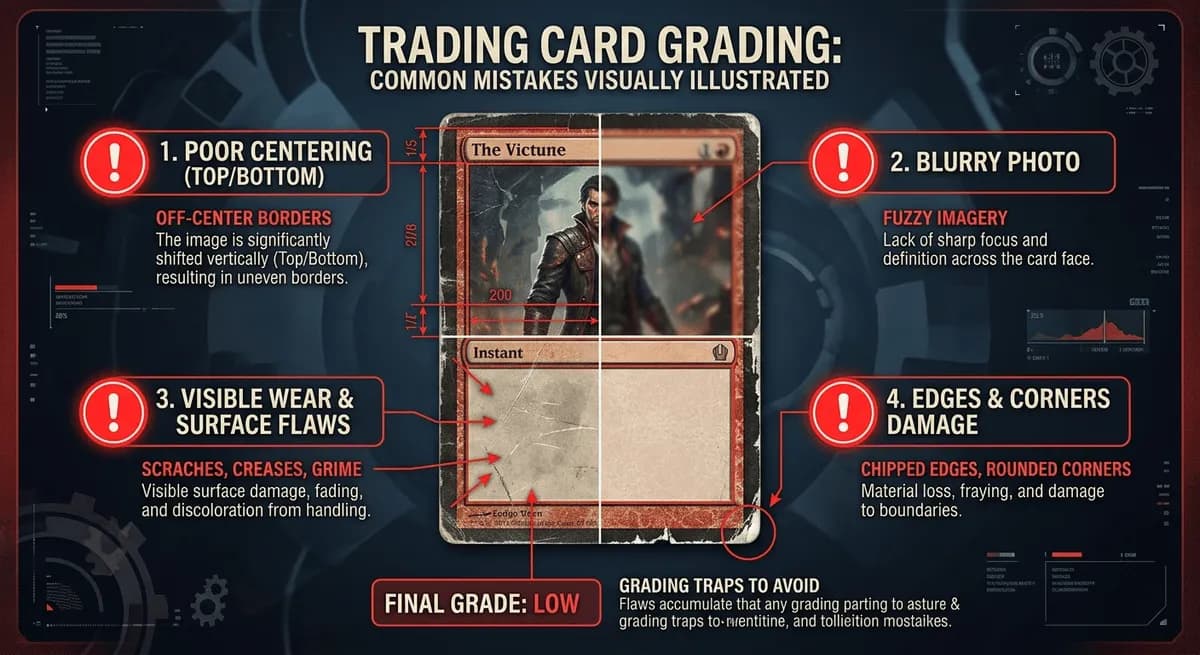
Most grading losses do not happen at the grading company. They happen at your desk, before the card ever leaves home.
Last reviewed: April 2026. Service information, grading standards, and market context were checked against current hobby guidance and official source pages where applicable.
A bad submission usually starts with overconfidence: assuming a card is a 10 because it looks clean in a sleeve, assuming every chase card should be graded, or assuming the market will reward whatever slab you choose. If you want better outcomes, remove avoidable mistakes first.
1. Submitting without pre-screening
If you never check centering, edges, and surface before paying fees, you are guessing. Use Master Grade on /#grade and compare with your expected sale price before mailing anything.
2. Grading cards that are not worth the fee
A decent card can still be a bad submission if the grading cost plus shipping and marketplace fees leave no margin. Use /prices and a break-even mindset.
3. Taking bad reference photos
Tilted, blurry, or sleeved photos make both AI and human self-review less reliable. Start with clean full-card images.
4. Ignoring the back of the card
Back centering, whitening, and small corner wear sink grades all the time. Front-only review is rookie behavior.
5. Confusing print defects with handling defects
Factory issues still affect grade outcomes. A card can come fresh from a pack with print lines or rough cuts.
6. Choosing the wrong grading company
The best slab for resale, personal collection, or sub-grades is not always the same. Match the card to the service.
7. Packing submissions carelessly
Semi-rigids, sleeves, order, and paperwork matter. Damage during transit is one of the dumbest possible losses.
8. Expecting every clean modern card to gem
Modern print quality can be strong, but PSA 10 still requires a lot to go right at once.
The most expensive mistake: grading on emotion
People send favorite cards because they love them, not because the numbers work. That is fine if the goal is personal collection. It is terrible if the goal is profit. Separate sentimental value from market value. A beloved card can deserve a slab without being a smart flip.
If you are on the fence, compare this article with Should You Grade Your Cards?and Graded vs Raw Value.
A better submission checklist
- ✓ Confirm the card identity and version on /identify if there is any uncertainty.
- ✓ Review front and back under clean lighting.
- ✓ Check if the card fits your fee tier and expected outcome on /prices.
- ✓ Use /tips and the photo workflow to capture accurate images.
- ✓ Use /faq if you are unsure how close AI estimates are meant to be.
- ✓ Submit only the cards that still make sense after all of that.
Mistakes newer collectors make in bulk lots
Bulk submissions create a different trap: one good card gets buried under fifty marginal ones. Instead of asking "can I grade all of these?" ask "which five have the clearest path to a strong result?" Bulk economics improve when you cut weak entries early.
Avoid bad fees before they happen.
Screen cards first, understand the likely grade range, and submit with intent instead of hope.
Related: Preparing a Bulk Submission, When to Submit Cards for Grading, and How to Clean Trading Cards Before Grading.
Related Articles
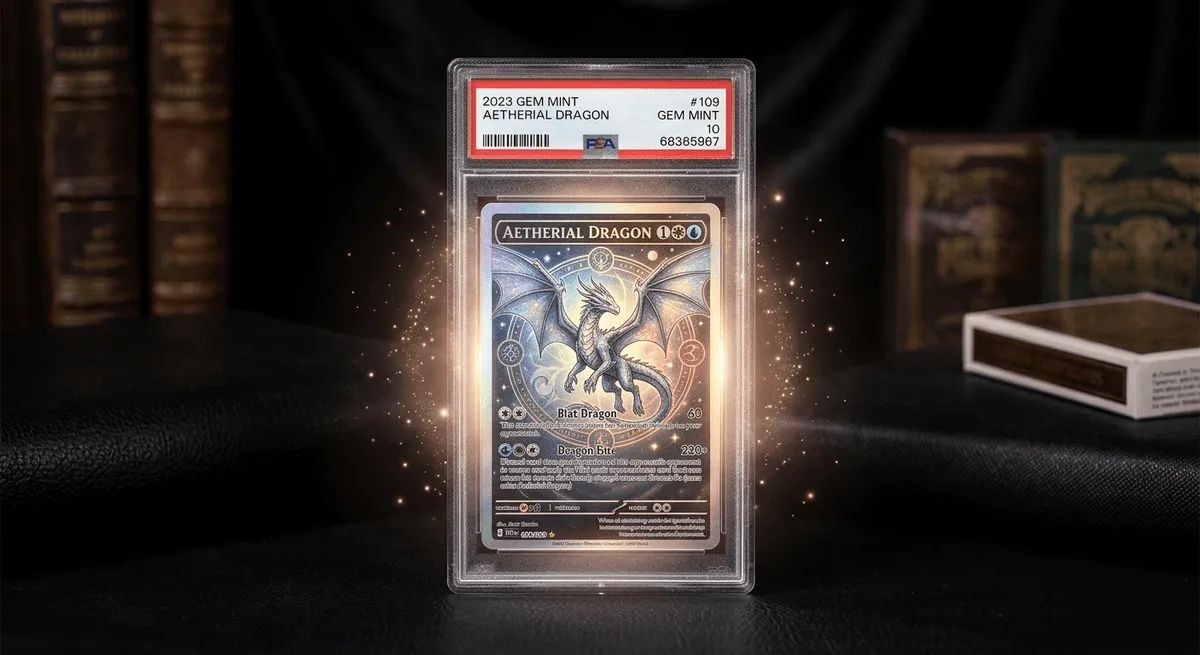
Which Cards Are Worth Grading? A Decision Framework
Not every card is worth the $30+ grading fee. Learn the value thresholds, condition cutoffs, and market signals that make a card worth submitting.
March 31, 2026 · 7 min read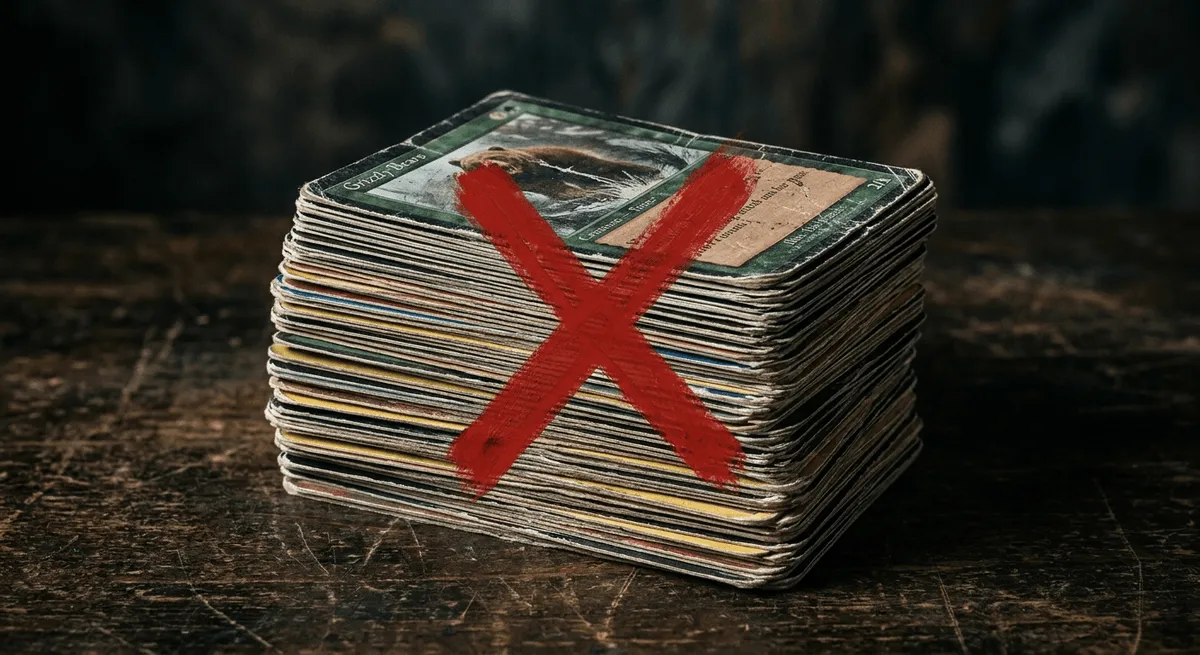
What Cards Are Not Worth Grading? A Collector Reality Check
The common submission types that usually fail the fee-versus-upside test, plus a cleaner rejection filter for collectors.
April 1, 2026 · 8 min read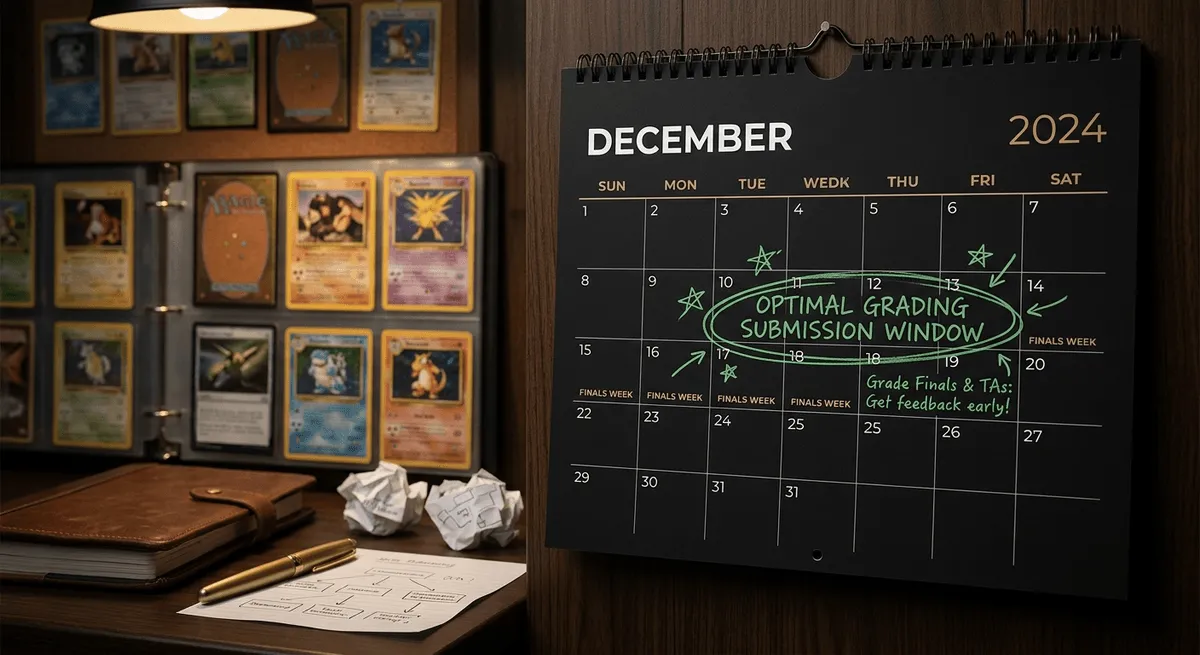
When to Submit Cards for Grading: Timing, Market, and Condition
A practical timing framework for grading decisions based on card condition, market window, fee structure, and downside risk.
April 1, 2026 · 7 min read
Should You Grade Your Cards? A Decision Framework for Collectors
Grading costs $15–$150 per card. Sometimes it doubles your value. Sometimes it destroys it. A five-variable decision tree for every submission.
April 1, 2026 · 8 min read