
How to Clean Trading Cards Before Grading Without Damaging Them
Good prep can remove loose dust and fingerprints. Bad prep can turn a PSA 9 candidate into an obvious pass.
Last reviewed: April 2026. Service information, grading standards, and market context were checked against current hobby guidance and official source pages where applicable.
Collectors hear "clean your cards before grading" and sometimes interpret that as restoration. It is not. Your job is to remove safe surface contaminants, not to fix real condition issues. If you are unsure whether you are cleaning or altering, stop. Use AI grading first and decide whether the card is worth any prep at all.
Safe card prep usually means:
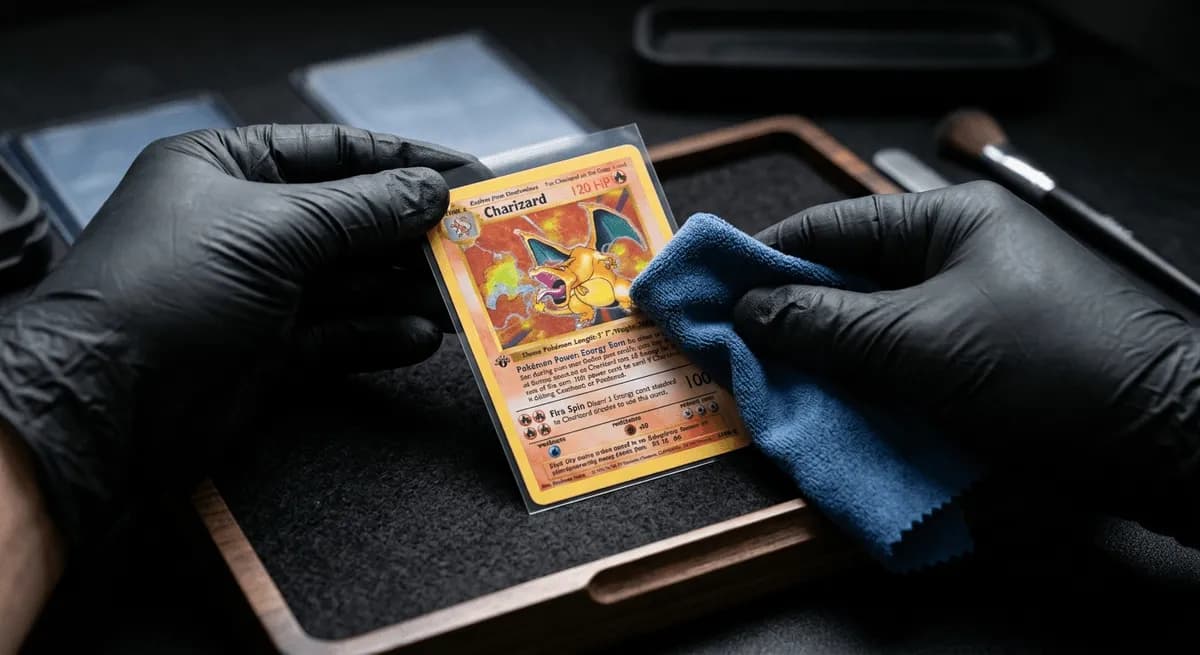
- Removing dust with a soft air blower or clean microfiber cloth.
- Clearing fresh fingerprints gently from glossy surfaces.
- Checking the card under light before sleeve-and-submit.
It does not mean using chemicals, water, erasers, tape, scraping tools, or pressure to chase a higher grade.
What you can safely remove
The only things most collectors should try to remove are loose dust, lint, and obvious fingerprint oils. These are on the card, not part of the card. Even then, work slowly. Modern glossy cards react differently from vintage matte surfaces, and foil areas show wipes more easily than people expect.
Dust and lint
Use a hand air blower first. If needed, use a clean microfiber cloth with almost no pressure.
Fingerprints
Use a fresh microfiber cloth and small circular motions from the center outward. Stop immediately if the surface drags.
Sleeve residue on a modern glossy card
Sometimes a dry wipe removes light residue, but do not scrub. If it resists, leave it alone.
What you should never do
No water or liquid cleaners
Moisture can swell stock, stain paper layers, or create rippling.
No erasers
They can burnish the surface, remove print, and leave texture changes.
No tape or adhesive tricks
You risk lifting gloss, foil, or paper fibers.
No pressing dents flat
That crosses into alteration risk fast.
No marker touch-up on whitening
That is restoration, not cleaning.
A safe pre-grading cleaning workflow
- Wash and fully dry your hands, or use clean nitrile gloves if you prefer.
- Work on a soft, clean surface with bright indirect light.
- Inspect the card front and back before touching anything.
- Use air first for loose dust.
- Use a clean microfiber cloth only if residue is still visible.
- Re-check edges, corners, and surface under angled light.
- Photograph the card using the setup in our photo guide.
- Compare the result against FAQ expectations and your submission budget on pricing.
Know the difference between dirt and damage
A smudge might wipe away. A scratch will not. Dust on an edge might vanish. Edge whitening will not. Print lines, indentation, roller marks, and most holo scratches are condition issues, not debris. Trying to force them away usually makes them worse.
If you cannot tell what you are looking at, use identify for the card itself, then compare the defects against known grading factors in tips.
Should you clean vintage cards?
Usually with extra caution, and often not at all. Vintage stock, older coatings, and worn edges are less forgiving. A dry dust removal may be fine. Aggressive wiping on vintage holos is how collectors add new hairlines right before submission. When the card is expensive, conservative handling beats heroic cleaning attempts.
Prep lightly. Screen smartly.
Clean only what is clearly removable, then use Master Grade to decide whether the card still deserves a submission slot.
Related: Common Card Grading Mistakes, Edge Whitening Guide, and Bulk Submission Checklist.
Related Articles
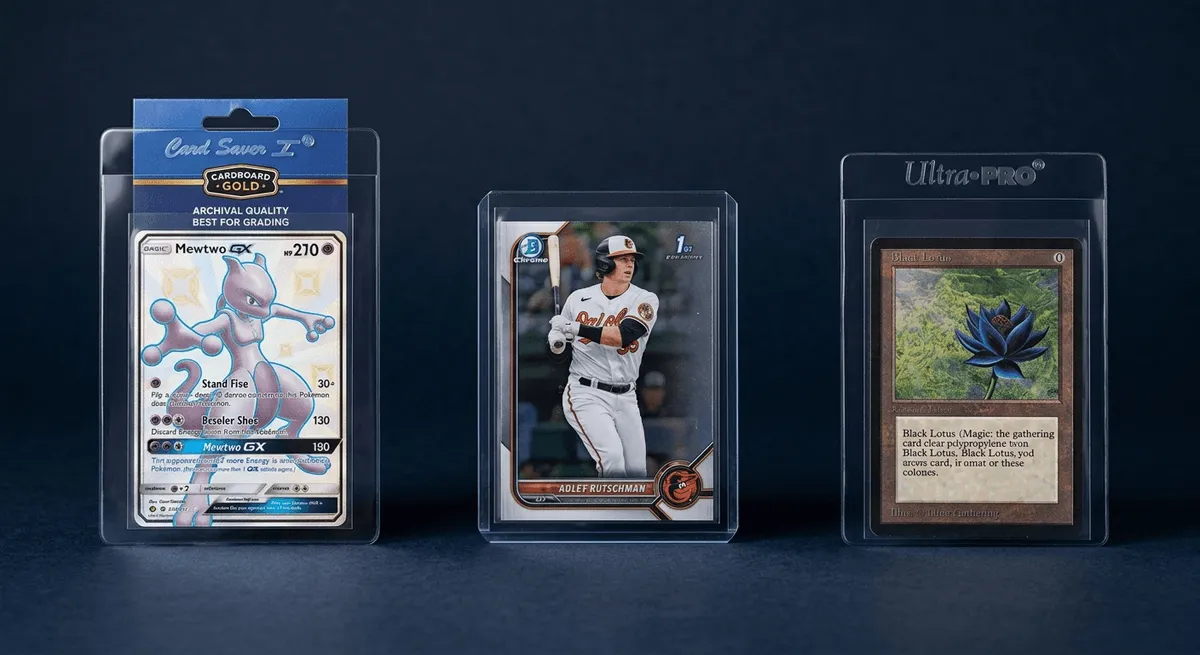
Card Saver vs Toploader vs Sleeve for Grading: What to Use
A prep guide for choosing sleeves, semi-rigids, and toploaders without adding avoidable damage before a submission.
April 1, 2026 · 7 min read
Day 1 of the 2026 Pokémon Los Angeles Regional Championships now underway featuring Pokémon VGC, Pokémon TCG and Pokémon GO events, tune in to the official livestream feeds here
The 2026 Pokémon Los Angeles Regionals are underway! Learn what this means for card collectors and how MasterGrade AI grading can help maximize value.
May 9, 2026 · 2 min read
Day 1 of the 2026 Pokémon Los Angeles Regional Championships now: what it means for collectors
Day 1 of the 2026 Pokémon Los Angeles Regionals is underway! Learn how the event impacts card values and your collection. Grade smarter with MasterGrade.
May 9, 2026 · 4 min read
Pokémon TCG: Mega Evolution — Chaos Rising launch promo features Ho-Oh, Keldeo and Delphox cards at select retailers
New Pokémon TCG "Mega Evolution — Chaos Rising" promo featuring Ho-Oh, Keldeo, and Delphox cards is here! Learn how it impacts card collectors!
May 9, 2026 · 2 min read