
Preparing a Bulk Card Grading Submission: Checklist and Strategy
Bulk grading can be efficient, but only if you screen hard and ship with discipline.
Last reviewed: April 2026. Service information, grading standards, and market context were checked against current hobby guidance and official source pages where applicable.
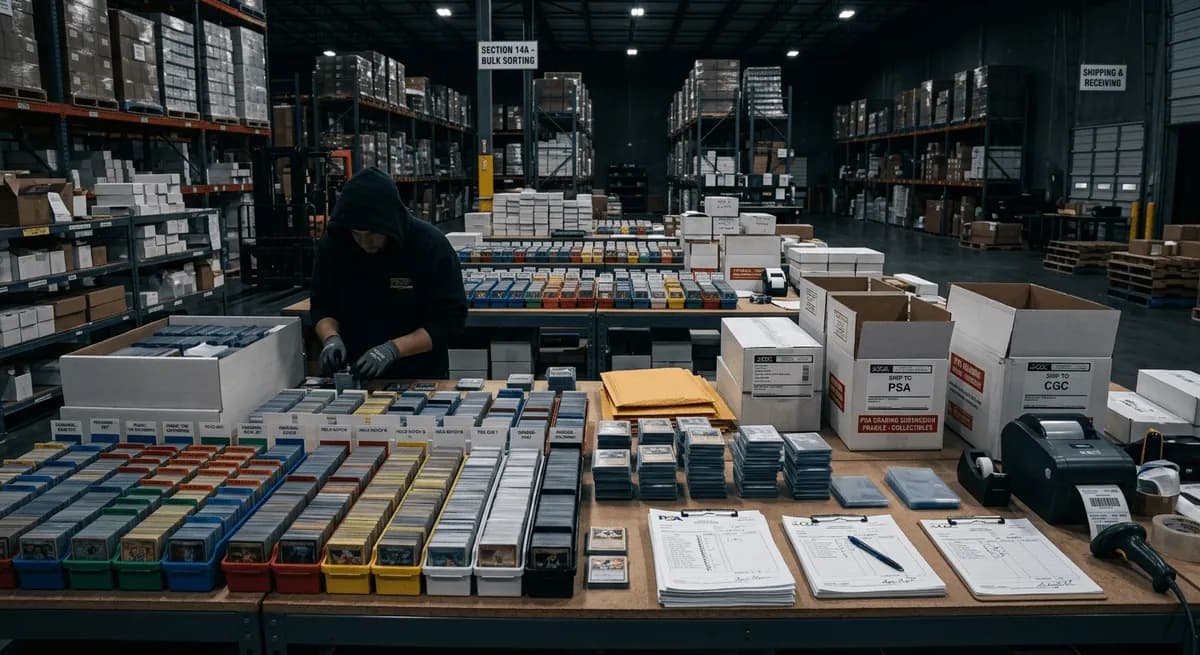
The point of a bulk submission is not to grade everything. It is to identify the cards that deserve a grading slot. If you skip sorting and condition triage, bulk grading becomes an expensive way to slab mediocre cards. Start with a pipeline, not a pile.
Step 1: Sort by purpose, not just game
Make separate groups for resale candidates, personal collection cards, and uncertain cards. These groups deserve different thresholds. A personal grail might justify grading at a lower expected ROI than a flip candidate.
Step 2: Remove obvious non-candidates fast
Do a quick pass for dents, whitening, deep scratches, visible print issues, and poor centering. This first cut should be brutal. You are not trying to rank every card perfectly. You are trying to stop weak candidates from stealing time and fees.
Useful bulk filters
- Reject cards with obvious corner bends or pressure dents.
- Reject cards with back whitening visible at arm's length.
- Flag borderline cards for photo review instead of immediate submission.
- Separate high-value cards from true bulk so you do not handle them the same way.
Step 3: Photograph only the serious group
Once you narrow the stack, use the same overhead photo workflow for each card. Consistent photos help AI grading stay comparable across the batch. If you need a refresher, start with our photography guide.
Step 4: Use AI to rank the stack
AI is especially useful in bulk because it helps prioritize. Instead of asking whether every card is gradeable, ask which cards appear strongest. Use /grade to sort likely gem candidates from probable 8s and 9s.
Step 5: Check economics before finalizing
Cards that look clean still need to justify the submission. Review current tier costs on /pricesand ask whether each card still makes sense if the grade lands slightly below your target.
Step 6: Confirm card identity where needed
Bulk lots often contain variants, promos, reprints, and similar-looking versions. If you are unsure which copy you have, confirm it on /identifybefore you lock in a submission order.
Step 7: Pack like transit damage is trying to happen
Sleeve every card first
Use clean penny sleeves before semi-rigids or your chosen submission holder.
Keep the order consistent
Your stack order should match your paperwork or tracking list.
Use rigid protection
Do not let the package flex freely in transit.
Prevent moisture exposure
Use a sealable bag or inner protection layer if shipping conditions are uncertain.
A simple bulk grading scoreboard
If you are working through a bigger stack, track four columns: card, likely grade band, estimated upside, and action. The action should be one of three things: submit now, hold raw, or review later. That small system alone prevents impulse submissions.
Bulk works best when your standards stay tight.
Use consistent photos, rank the best candidates, and only pay for cards that survive the math.
Related: Common Card Grading Mistakes, When to Submit Cards for Grading, and Which Cards Are Worth Grading?.
Related Articles

How to Pre-Screen Cards Before Grading: A 5-Minute Reject-First Routine
A fast pre-screen workflow for centering, corners, edges, surface, and value so you can reject weak submissions before they eat grading fees.
April 1, 2026 · 8 min read
Day 1 of the 2026 Pokémon Los Angeles Regional Championships now underway featuring Pokémon VGC, Pokémon TCG and Pokémon GO events, tune in to the official livestream feeds here
The 2026 Pokémon Los Angeles Regionals are underway! Learn what this means for card collectors and how MasterGrade AI grading can help maximize value.
May 9, 2026 · 2 min read
Day 1 of the 2026 Pokémon Los Angeles Regional Championships now: what it means for collectors
Day 1 of the 2026 Pokémon Los Angeles Regionals is underway! Learn how the event impacts card values and your collection. Grade smarter with MasterGrade.
May 9, 2026 · 4 min read
Pokémon TCG: Mega Evolution — Chaos Rising launch promo features Ho-Oh, Keldeo and Delphox cards at select retailers
New Pokémon TCG "Mega Evolution — Chaos Rising" promo featuring Ho-Oh, Keldeo, and Delphox cards is here! Learn how it impacts card collectors!
May 9, 2026 · 2 min read