
When to Submit Cards for Grading: Timing, Market, and Condition
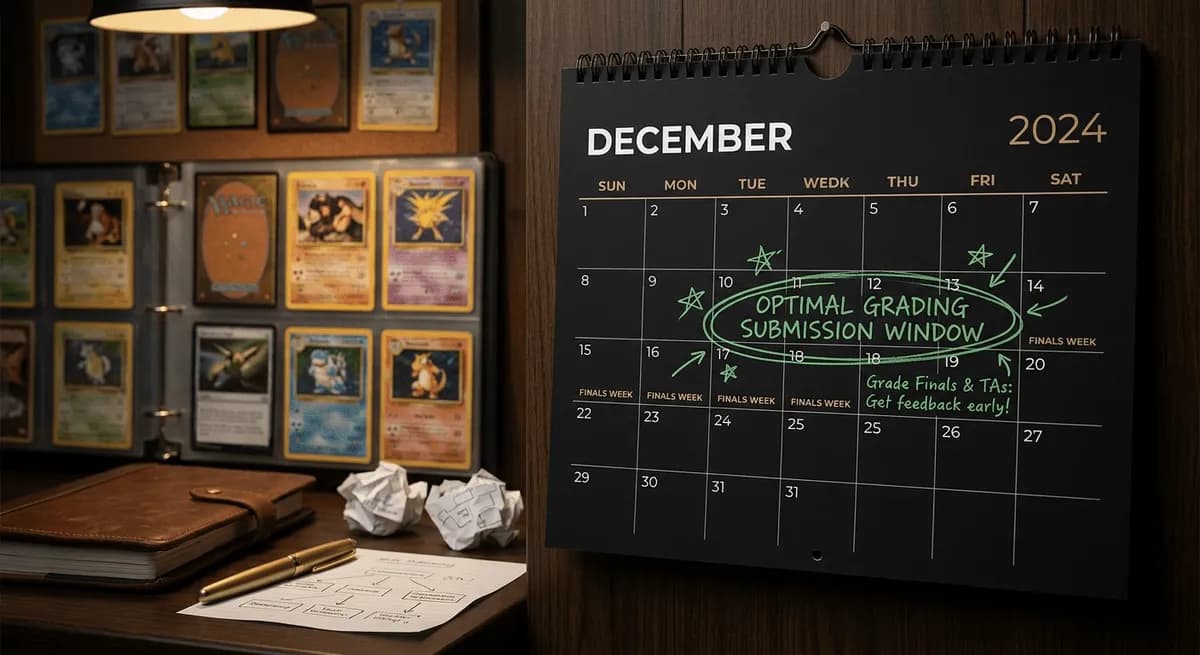
The right card at the wrong time can still be a weak submission. Timing matters almost as much as condition.
Last reviewed: April 2026. Service information, grading standards, and market context were checked against current hobby guidance and official source pages where applicable.
Collectors usually ask whether a card is worth grading. The better question is whether it is worth grading now. Grading fees, market hype, turnaround times, and condition certainty all change the answer. The smartest submitters do not just hunt the right cards. They pick the right window.
Submit when condition is clear
If you are not reasonably confident about the grade band, wait. Use Master Grade, straight-on photos, and a careful front/back review first. Uncertain condition plus non-trivial fees is how people turn decent cards into money-losing submissions.
Submit when the fee structure still works
A card does not need to be ultra-premium to justify grading, but the math has to survive grading fees, shipping, sales fees, and your likely outcome. Before you package anything, review pricingand decide what minimum grade still makes sense.
Ask three questions:
- What do I think this card grades?
- What happens if it comes back one grade lower?
- Would I still be happy holding or selling it in that outcome?
New release hype is not always the best window
Early hype can create massive attention, but it also creates risk. Prices on brand-new chase cards are often most unstable before population reports fill in and before buyers settle on real demand levels. If you pull a clean monster hit early, grading can make sense. If you are submitting average copies because the market is loud, that is usually weaker logic.
Vintage and scarce cards reward patience
Older cards usually justify slower, more careful review. You are less likely to replace them cheaply, and tiny flaws carry bigger price consequences. For vintage, take extra time with identification, photography, and defect review. Use /identifyif you need help confirming print details before submission.
Submit before condition gets worse
If a raw card is clean, liquid, and at risk of further handling wear, encapsulation itself can be a reason to submit. This is especially true for cards that move in and out of trade binders or shows. A card that looks PSA 10-caliber today can be a PSA 9 after one careless weekend.
Good times to wait
Wait if—¦ You only have sleeve photos
Get better images first.
Wait if—¦ The card has a likely surface issue you have not confirmed
Review under angled light before spending money.
Wait if—¦ You are submitting because the card is hot on social media
Hype is not the same thing as durable value.
Wait if—¦ You do not know which grading service fits your goal
Read comparisons first and avoid a mismatched slab.
A practical timing framework
- Confirm the card and variation.
- Capture accurate front/back photos.
- Estimate grade range with AI and self-review.
- Check value spread between raw and graded outcomes.
- Choose the grading service that matches your goal.
- Submit only if the downside still feels acceptable.
The best timing starts with clear information.
Grade only when the card, the photos, and the math all point the same direction.
Related: Should You Grade Your Cards?, PSA vs BGS vs CGC, and Preparing a Bulk Submission.
Related Articles
Which Cards Are Worth Grading? A Decision Framework
Not every card is worth the $30+ grading fee. Learn the value thresholds, condition cutoffs, and market signals that make a card worth submitting.
March 31, 2026 · 7 min read
What Cards Are Not Worth Grading? A Collector Reality Check
The common submission types that usually fail the fee-versus-upside test, plus a cleaner rejection filter for collectors.
April 1, 2026 · 8 min read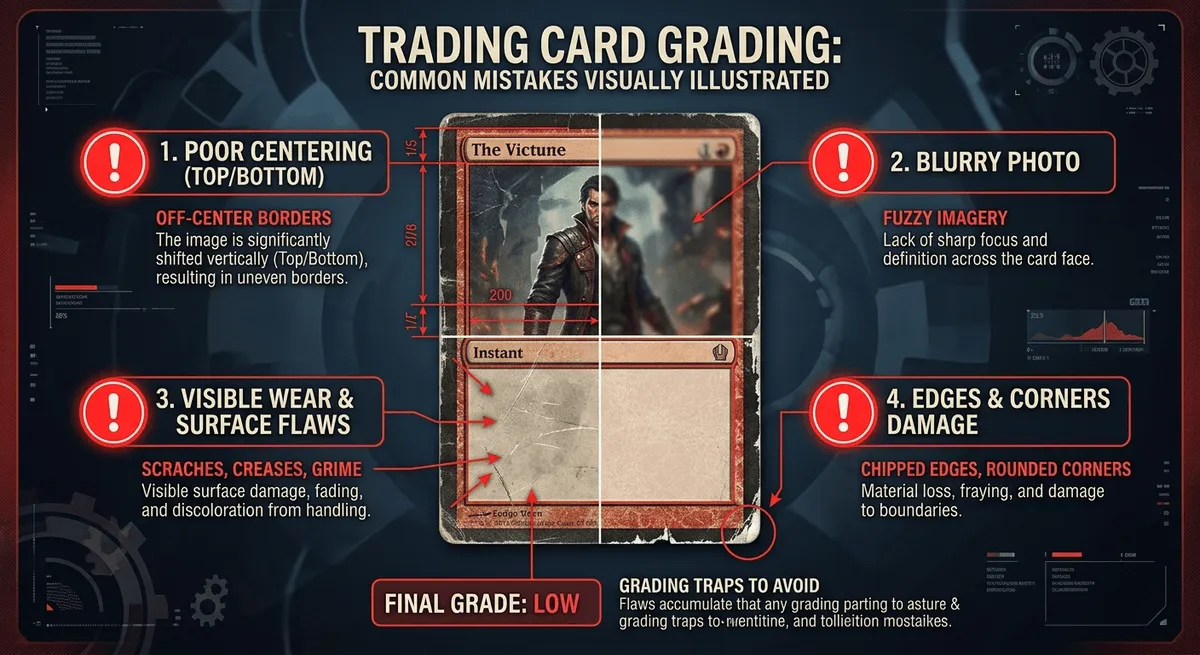
Common Card Grading Mistakes to Avoid Before You Submit
The avoidable errors that waste grading fees: weak screening, bad photos, wrong service choice, sloppy packing, and emotion-driven submissions.
April 1, 2026 · 8 min read
Should You Grade Your Cards? A Decision Framework for Collectors
Grading costs $15–$150 per card. Sometimes it doubles your value. Sometimes it destroys it. A five-variable decision tree for every submission.
April 1, 2026 · 8 min read