
Sports Card Surface Defects Guide: Print Lines, Dimples, and Scratches
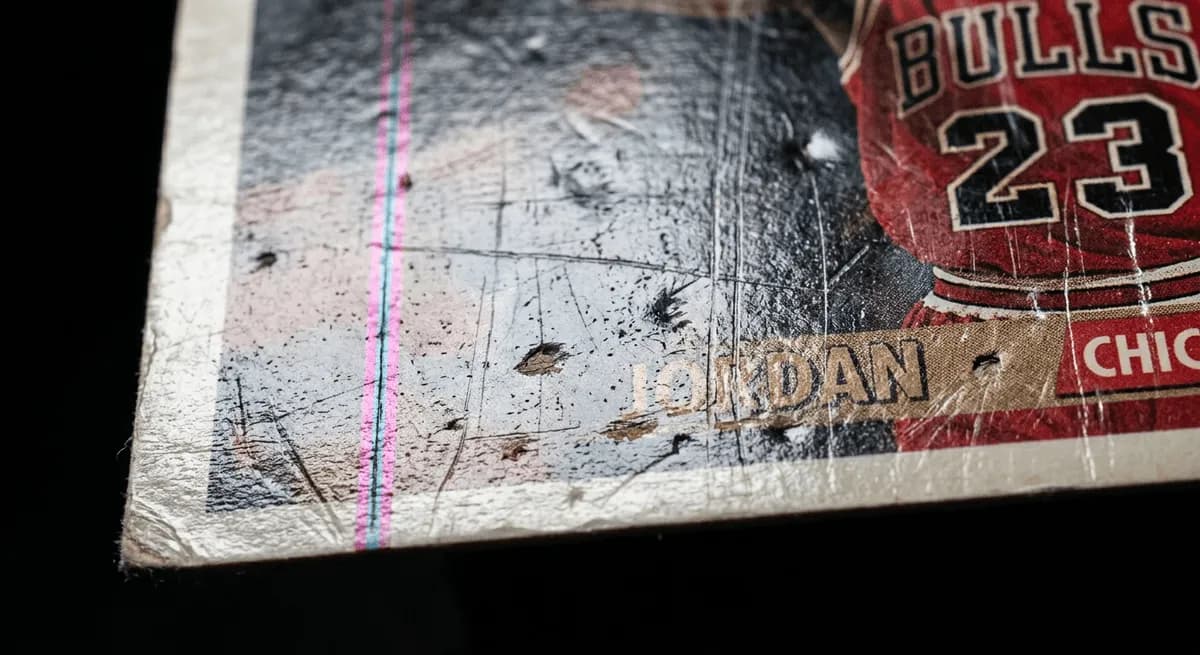
Surface defects are the reason many sharp-looking sports cards never become gem mint slabs.
Last reviewed: April 2026. Service information, grading standards, and market context were checked against current hobby guidance and official source pages where applicable.
Sports card collectors often focus on corners and centering first. That makes sense, because those flaws are visible fast. But surface is where modern chrome, refractor, and glossy cards quietly fail. A card can look excellent head-on and still carry the kind of line or dimple that caps the grade.
The surface defects that matter most
Print lines
Straight or slightly curved lines in the finish, especially noticeable on chrome and holo surfaces.
Dimples or pits
Small depressions in the stock or coating that show under angled light.
Scratches
Fine hairlines from handling, pack friction, or poor storage.
Indentations
Pressure marks that can be hard to see but are serious grading problems.
Roller marks or factory streaking
Manufacturing issues that still affect the final grade even if you did nothing wrong.
How to check sports card surfaces properly
Use a bright point light and tilt the card slowly. Look for interruptions in the reflection. On chrome or refractor stock, defects often appear only when the light travels across the card. Flat room lighting hides too much.
This is also where good photography matters. Follow the photo workflowif you want AI review to be useful instead of noisy.
Factory defects still count
A lot of collectors get frustrated here, but the grading company is evaluating condition, not fairness. A pack-fresh card with print lines is still a lower-grade card. That is why pre-screening matters so much on modern sports releases.
Good workflow for sports cards
When a sports card is still worth grading
Surface sensitivity does not mean avoid grading. It means be selective. If the player, scarcity, and market demand are strong, and the card still looks clean under proper light, grading can absolutely make sense. The mistake is treating every sharp-cornered card as a gem candidate.
When to keep it raw
Keep it raw when the defect is visible enough that you already know the top grade outcome is gone, or when the value spread does not justify the risk. Sometimes a clean raw card listing with honest photos is the better business decision.
Surface review is where gem candidates separate themselves.
Check the finish carefully before you spend money chasing a grade ceiling the card cannot reach.
Related: Sports Card Grading in 2026, Common Card Grading Mistakes, and Graded vs Raw Value.
Related Articles
Sports Card Grading in 2026: What Actually Deserves a Submission
Modern chrome, vintage stars, rookie hype, and population traps — a realistic 2026 submission framework for sports card collectors.
April 1, 2026 · 9 min read
How to Pre-Screen Cards Before Grading: A 5-Minute Reject-First Routine
A fast pre-screen workflow for centering, corners, edges, surface, and value so you can reject weak submissions before they eat grading fees.
April 1, 2026 · 8 min read
Day 1 of the 2026 Pokémon Los Angeles Regional Championships now underway featuring Pokémon VGC, Pokémon TCG and Pokémon GO events, tune in to the official livestream feeds here
The 2026 Pokémon Los Angeles Regionals are underway! Learn what this means for card collectors and how MasterGrade AI grading can help maximize value.
May 9, 2026 · 2 min read
Day 1 of the 2026 Pokémon Los Angeles Regional Championships now: what it means for collectors
Day 1 of the 2026 Pokémon Los Angeles Regionals is underway! Learn how the event impacts card values and your collection. Grade smarter with MasterGrade.
May 9, 2026 · 4 min read