
Best Card Grading Service for Pokémon: PSA, BGS, or CGC for Your Goal?
April 1, 2026 · 8 min read
A decision guide for Pokémon collectors choosing between PSA, BGS, and CGC based on resale premium, subgrades, turnaround, and collection style.
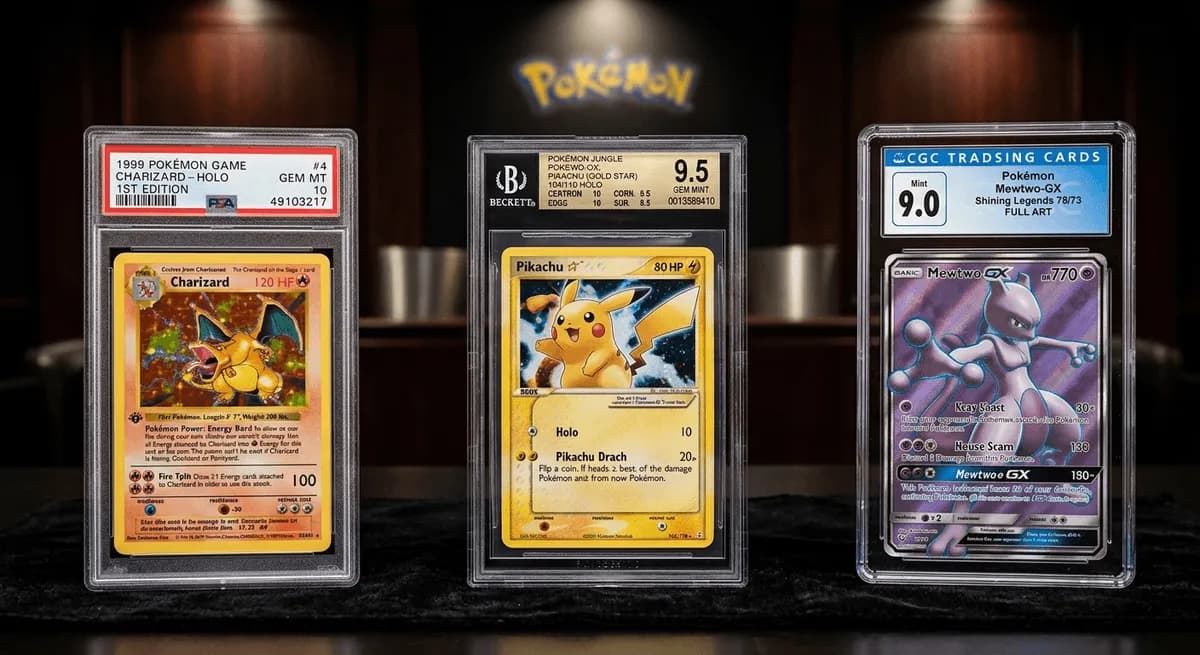
Last reviewed: April 2026. Pricing, fees, and turnaround estimates can change, so verify current submission details on official PSA, Beckett, and CGC source pages before you mail cards.
Choosing a grading service for Pokémon is not just about cost ” it is about matching your goal: maximum resale value, personal collection depth, budget efficiency, or speed. Each of the three major services has a distinct profile for Pokémon collectors in 2026.
Head-to-head: PSA vs BGS vs CGC for Pokémon
Sources: PSA, BGS, CGC. Current as of April 2026 - verify at time of use.
When PSA is the right call for Pokémon
PSA is the right call when you are buying or selling high-value slabs. The PSA label carries the most trust in the Pokémon secondary market, and buyers consistently pay a premium for PSA-graded cards over equivalent BGS or CGC grades. For vintage Charizards, first-edition Base Set holos, or modern chase cards worth $500+, PSA is almost always the optimal choice.
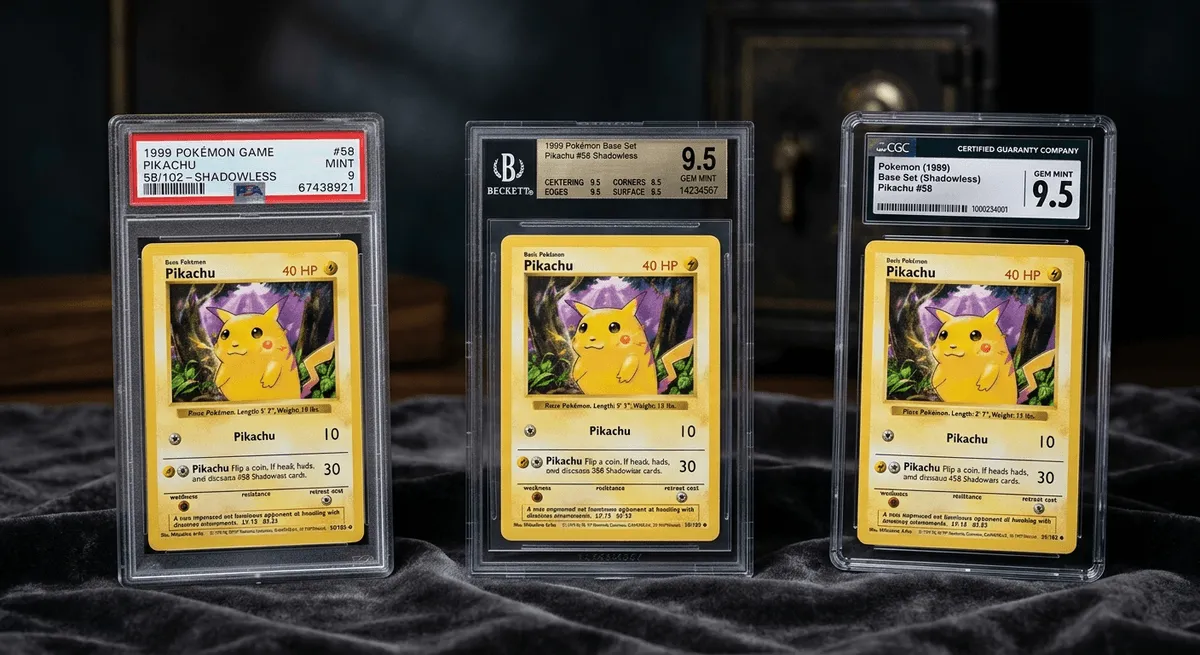
The main trade-off: no sub-grades. A PSA 10 tells you the card is perfect but not why. A BGS 9.5 tells you the card is 9.5 because centering is 9.0 but everything else is 10. For personal collection education, that detail has real value.
When BGS makes sense for Pokémon
BGS is underutilized in the Pokémon market and that creates opportunity. BGS Black Label 10s (all four sub-grades at 10) are rarer than PSA 10s for many Pokémon cards and can command a comparable or even superior premium in niche markets. The centering sub-grade is especially useful for Pokémon because centering issues are one of the most common failure points on modern Pokémon cards from the factory.
BGS is the best choice for: collectors who want to learn exactly where their card falls short, investors targeting Black Label specimens, and anyone submitting cards where you suspect centering might be the limiting factor.
When CGC is the smart play for Pokémon
CGC has the fastest turnaround and the lowest cost, and its market acceptance in Pokémon has grown substantially since 2023. For cards in the $50”“300 raw value range where the PSA premium does not justify the declared value fee, CGC is often the better math. A CGC 10 on a $100 raw card might add $80”“120 in graded value, versus a PSA 10 that costs disproportionately more to achieve.
CGC is also the best choice for budget bulk submissions ” grading 50 commons and uncommons from a collection clear-out where the expected grade is 8”“9.5 and the per-card math needs to work at $15”“20 per card.
Decision tree by card type
One more variable: pre-screening
Before committing to any grading service, use Master Grade's AI pre-screening to get a likely grade range. If you are thinking PSA for a card that looks like a 7”“8, the math probably does not work. Knowing the likely outcome before you pick the service eliminates the worst submissions before they cost money.
Not sure which service to use?
Pre-screen your card first, then match the service to the likely grade and card value.
Related: How to Grade Pokémon Cards, Pokémon Submission Strategy, Centering Guide
Related Articles
PSA vs BGS vs CGC: Which Grading Service Should You Use?
A detailed comparison of the three major card grading services. Cost, turnaround time, accuracy, market premium, and which is best for your collection.
March 31, 2026 · 6 min read
Modern vs Vintage Card Grading: How Submission Strategy Changes
Why modern and vintage cards need different review standards, different expectations, and different submission discipline.
April 1, 2026 · 8 min read
PSA Grading Cost Guide 2026: Fees, Break-Even Math, and Hidden Costs
A collector-first PSA cost guide covering declared value tiers, shipping, insurance, and the break-even math that matters more than the headline fee.
April 1, 2026 · 9 min read
Japanese vs English Pokémon Cards: Grading and Value Differences
Japanese cards grade better and print cleaner — but English cards command bigger market premiums. The complete breakdown for collectors and investors.
April 1, 2026 · 8 min read