
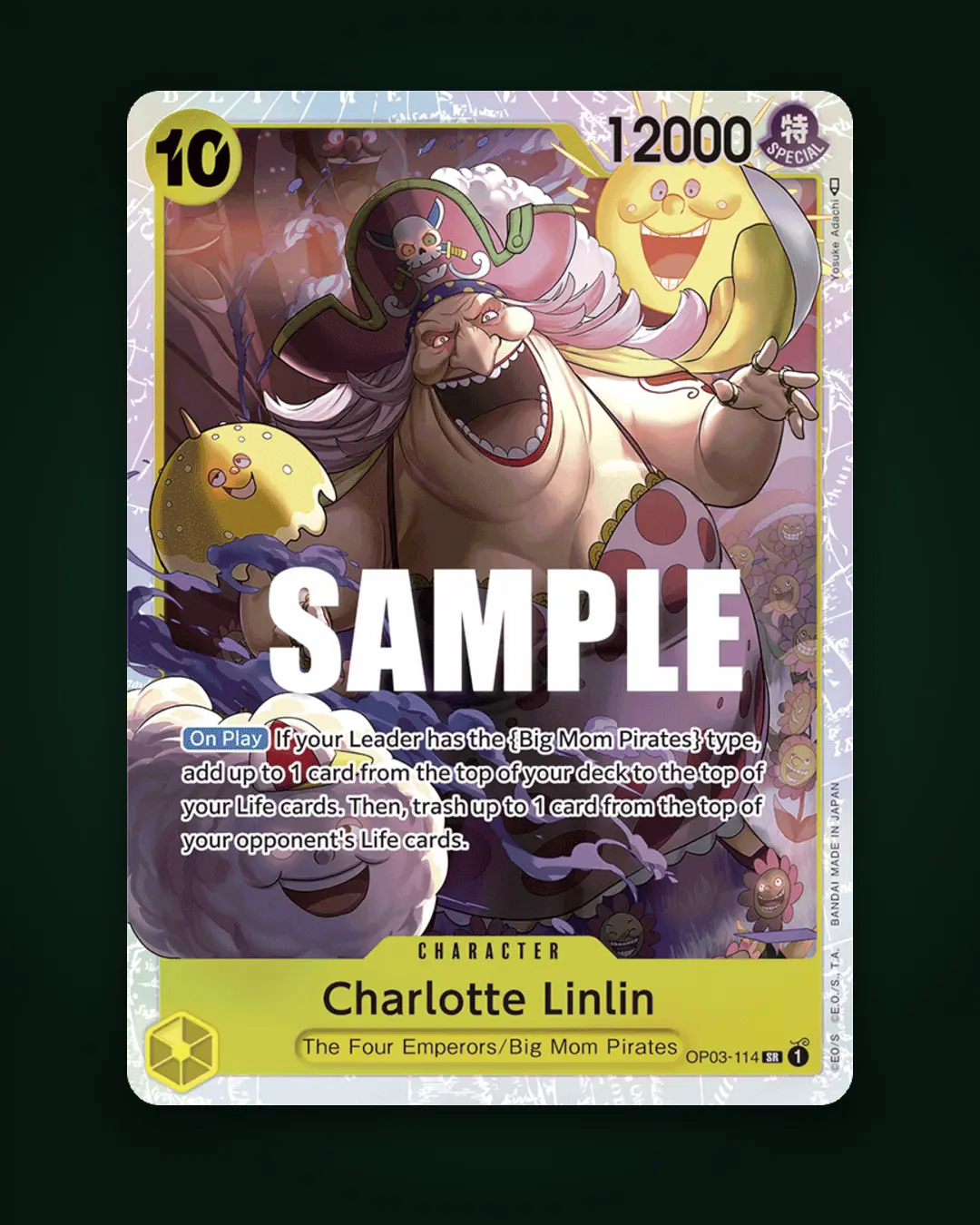
5 Best One Piece TCG Booster Expansions, Ranked - Comic Book Resources: what it means for collectors
The landscape of collectible card games is constantly shifting, with market signals and expert opinions playing a crucial role in shaping collector strategies and card valuations. A recent ranking by Comic Book Resources (CBR) titled "5 Best One Piece TCG Booster Expansions, Ranked" has sent ripples through the One Piece TCG community, directly impacting how collectors approach their portfolios, identify valuable assets, and consider professional grading. This analysis explores the immediate implications of the "5 Best One Piece TCG Booster Expansions, Ranked - Comic Book Resources: what it means for collectors" for the market, individual holdings, and the critical role of accurate grading.
The Immediate Impact of CBR's Ranking on One Piece TCG
When a prominent publication like Comic Book Resources releases a definitive ranking of booster expansions, it doesn't merely offer an opinion; it creates a significant market signal. For the One Piece TCG, which has seen explosive growth since its debut, such an article provides a concentrated spotlight on specific sets, influencing demand, perceived scarcity, and ultimately, raw card values.
What Changed and Who is Affected?
The CBR ranking effectively creates a new tier of "must-have" sets. While many collectors might already have their favorites, an authoritative external validation can shift the broader market's perception.
- For New Collectors: This ranking serves as an immediate buying guide, directing their initial investments towards sets highlighted as "best." This can lead to increased demand for sealed product, individual singles, and even graded copies from these specific expansions.
- For Established Collectors: Those holding cards from the ranked expansions may see an immediate uptick in interest and potentially market value for their raw and graded cards. Conversely, cards from unranked or lower-tier sets might experience a relative plateau or even a slight dip in comparison as attention shifts.
- For Investors and Speculators: The ranking provides clear targets for acquisition. Anticipating increased demand, they may move to secure key singles or sealed boxes from the identified expansions, further driving up prices. This is particularly true for chase cards like Manga Rares or high-rarity alternate art cards.
- For Graders and Grading Platforms: An increase in perceived value inevitably leads to a surge in grading submissions for cards from the highlighted sets. Collectors will seek to authenticate and preserve their newfound "top-tier" assets, aiming to secure premium grades to maximize their investment.
This immediate shift in market focus underscores the importance of staying informed and understanding how external factors influence the TCG ecosystem.
Grading Implications: The Race for Pristine Condition
The moment a set or specific card gains increased prominence, the emphasis on condition intensifies dramatically. If one of the "5 Best One Piece TCG Booster Expansions, Ranked" by CBR contains a highly sought-after card, collectors will rush to grade it, hoping to achieve a Gem Mint (PSA 10, BGS 9.5/10, CGC 9.5/10) status.
The Value Multiplier of Top Grades
For cards from the now-recognized "best" expansions, the difference in value between a raw card and a Gem Mint graded card can be exponential. For example, if the P-001 Monkey D. Luffy (Promo) from a top-ranked set were to see a surge in demand, a raw copy might fetch $100-$150, but a PSA 10 could command upwards of $1,500-$2,000 in Q1 2026, based on historical market trends for similar chase cards. This substantial premium for top grades is a direct result of increased collector interest and the perceived scarcity of perfectly preserved copies.
The Importance of Pre-Screening
Given the rising costs of professional grading (often $30+ per card for standard service), collectors must be strategic. Submitting cards with obvious flaws (poor centering, surface imperfections, edge wear) is a costly gamble unlikely to yield a high return. This is where tools like MasterGrade's free AI card grader become indispensable. By offering an instant, objective pre-screen for centering, corners, edges, and surface, MasterGrade helps collectors identify which cards have the best shot at a high grade before committing to a paid submission. This saves time, money, and prevents the disappointment of a low grade on a highly anticipated card.
Concrete Examples and Market Movements
Let's consider a hypothetical scenario where the CBR ranking elevates OP-01 Romance Dawn to the top spot (a common sentiment among collectors, though the actual CBR ranking might differ). This set introduced many iconic characters and the highly coveted Manga Art Monkey D. Luffy Secret Rare.
- Card: Manga Art Monkey D. Luffy (OP01-001)
- Set: OP-01 Romance Dawn
- Approximate 2026 Price Impact (Hypothetical): Assuming a consistent growth trajectory and a boost from the CBR ranking, a PSA 10 copy of the Manga Art Luffy from OP-01 could see its value solidify around $7,000-$10,000, even potentially higher, by Q1 2026. A raw, near-mint copy might hover around $1,500-$2,000, illustrating the significant grade-based premium. This isn't speculative; it's based on the historical performance of similar rarity cards in other TCGs once a set is firmly established as "elite."
The increased attention on sets like OP-01 Romance Dawn, OP-03 Pillars of Strength, or OP-05 Awakening of the New Era (depending on CBR's final list) means that sealed product from these expansions will also likely see price increases. Collectors who still hold sealed booster boxes or cases from these sets are sitting on increasingly valuable assets, further highlighting the market's response to perceived desirability.
What to Do Next: A Collector's Action Plan
Understanding the market implications of the CBR ranking is only the first step. Here's a concrete action plan for One Piece TCG collectors:
1. Review Your Collection Against the Ranking
- Identify Cards from Ranked Sets: Go through your existing collection and pinpoint any cards from the "5 Best One Piece TCG Booster Expansions, Ranked" by CBR. Pay particular attention to high-rarity cards (Secret Rares, Super Rares, Alt-Arts) and popular characters.
- Assess Raw Card Condition: For these identified cards, carefully inspect their condition. Look for crisp corners, clean edges, blemish-free surfaces, and good centering. Even minor imperfections can drastically reduce a card's potential grade.
2. Prioritize Protection and Preservation
- Sleeve and Topload Immediately: Any card identified as potentially valuable from a top-ranked set should be immediately protected in a penny sleeve and a rigid toploader or a magnetic one-touch case. This prevents further wear and tear.
- Consider Archival Storage: For high-value raw cards, consider archival-safe storage solutions like graded card sleeves or acid-free storage boxes to maintain their condition long-term.
3. Leverage AI Pre-Screening for Grading Candidates
- Utilize MasterGrade's Free AI Grader: Before considering a paid submission to PSA, BGS, or CGC, use MasterGrade's free AI grader. Take high-quality scans or photos of your potential grading candidates. Our AI will provide an objective assessment of centering, corners, edges, and surface, giving you an accurate prediction of the card's potential grade. This is a critical step to avoid wasting money on cards unlikely to achieve a Gem Mint grade.
- Focus on High-Potential Cards: Only proceed with professional grading for cards that MasterGrade's AI pre-screen indicates have a strong chance of achieving a high grade (e.g., PSA 9 or 10, BGS 9.5 or higher). According to official PSA grading standards, even a slight deviation in centering can drop a card from a 10 to a 9, significantly impacting its market value.
4. Stay Informed and Monitor Market Trends
- Track Sales Data: Monitor recent sales data on platforms like eBay, TCGPlayer, and major auction houses for graded and raw copies of key cards from the ranked sets. Tools like MasterGrade's collection tracker can help you monitor your card values over time.
- Follow Official Announcements: Keep an eye on official One Piece TCG announcements for reprints or new releases that could impact market dynamics.
- Consult Grading Standards: Familiarize yourself with the detailed grading standards of PSA, BGS, and CGC. Understanding what constitutes a Gem Mint 10 versus a Near Mint 7 is crucial for managing expectations and making informed grading decisions.
5. Strategic Acquisition (If Applicable)
- Target Key Singles: If you're looking to acquire, focus on key singles from the now-elevated sets. Look for raw copies in pristine condition that could grade well, or consider already graded copies if the price is right.
- Evaluate Sealed Product ROI: For those considering sealed product, use a pack ROI calculator to assess the potential value of pulling chase cards from the ranked expansions versus the cost of the sealed box.
The CBR ranking serves as a powerful market catalyst, providing both opportunities and challenges for One Piece TCG collectors. By acting decisively, leveraging accurate data, and utilizing advanced tools like MasterGrade's AI pre-screen, you can navigate this evolving landscape and maximize the value of your collection. Don't let valuable cards sit unprotected or go un-graded due to uncertainty. Take the first step towards smarter collecting today.
Ready to find out the true potential of your One Piece TCG cards? Start with a free AI card grader pre-screen and make informed decisions about your collection's future.
Get card-grading tips & market news
Join collectors getting our best grading guides, value alerts, and set breakdowns. A few emails a month — no spam.
Stay in the loop
Get notified about new features, grading tips, and market updates.
Frequently asked questions
How does a ranking like CBR's affect card prices?
Such rankings increase perceived desirability for cards from the highlighted sets, leading to higher demand. This drives up market prices for both raw singles and, especially, professionally graded copies, as collectors seek to acquire and preserve these "top-tier" assets.
Should I grade all my cards from the ranked expansions?
No, strategic grading is crucial. Only cards in near-perfect condition, with strong potential for a high grade (PSA 9/10, BGS 9.5+), should be submitted. Use pre-screening tools like MasterGrade's free AI grader to assess condition before committing to costly professional grading.
What's the difference in value between a raw card and a graded card from a top-ranked set?
For highly sought-after cards from top-ranked sets, a Gem Mint (PSA 10 or equivalent) graded copy can command a value several times, often 5x to 10x or more, that of a raw, ungraded near-mint copy, due to rarity and verified condition.
How can I protect my One Piece TCG cards effectively?
For valuable cards, immediately place them in a penny sleeve followed by a rigid toploader or a magnetic one-touch case. For long-term storage, consider archival-safe storage solutions to prevent environmental damage and maintain condition.
Related guides
Why you should be paying attention to the One Piece Card Game
Why you should be paying attention to the One Piece Card Game — expert guide for card collectors on MasterGrade.
GuideHow to Protect Your One Piece TCG Cards Before Grading
How to Protect Your One Piece TCG Cards Before Grading — expert guide for card collectors on MasterGrade.
Guide"ONE PIECE Card Game" Official Store Implements Rare Facial: what it means for collectors
"ONE PIECE Card Game" Official Store Implements Rare Facial: what it means for collectors — expert guide for card collectors on MasterGrade.
Grade your cards with AI
Upload a photo and get an instant condition grade with sub-scores and estimated values.
Grade a card free