
The Process
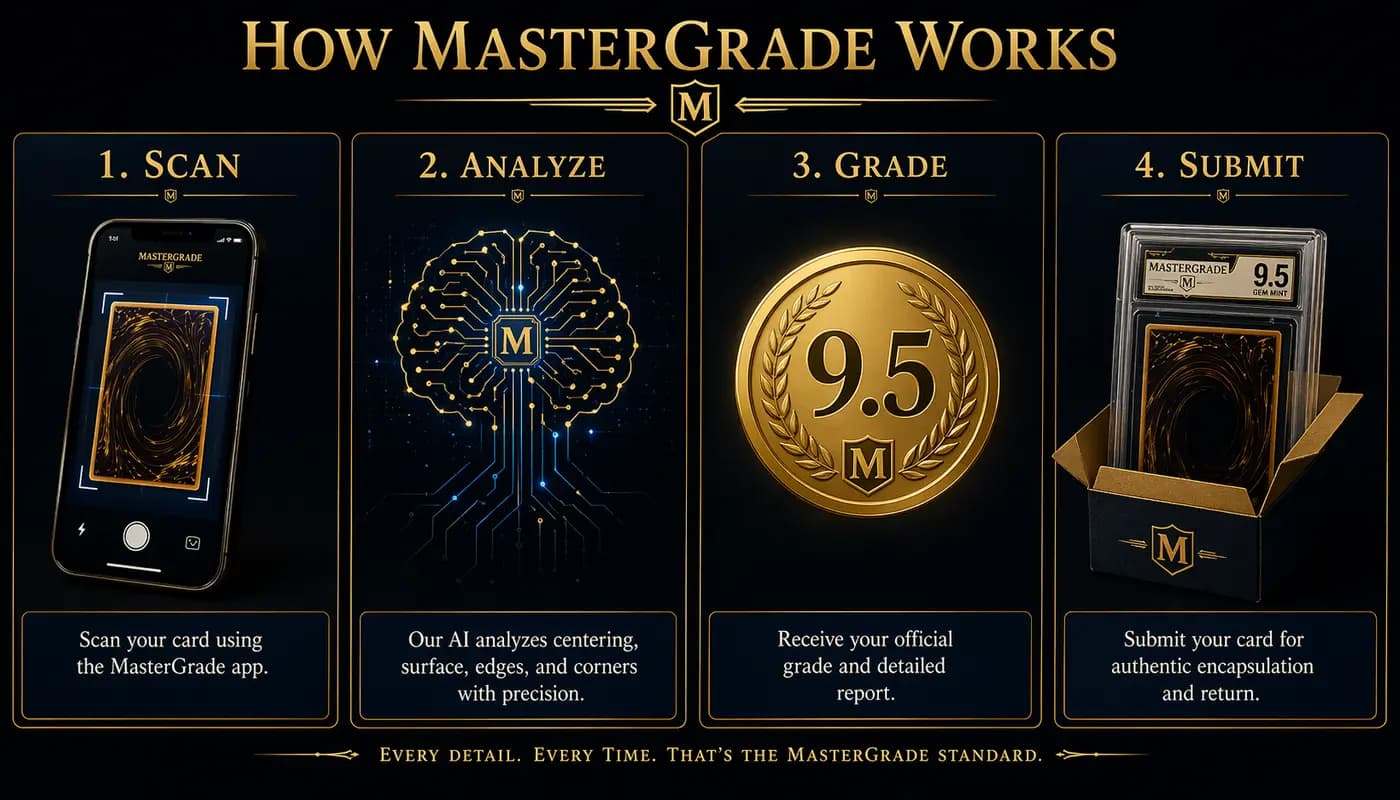
How MasterGrade Works
Four steps from scan to slab. Every detail, every time — that's the MasterGrade standard.
The Four Pillars
What We Grade
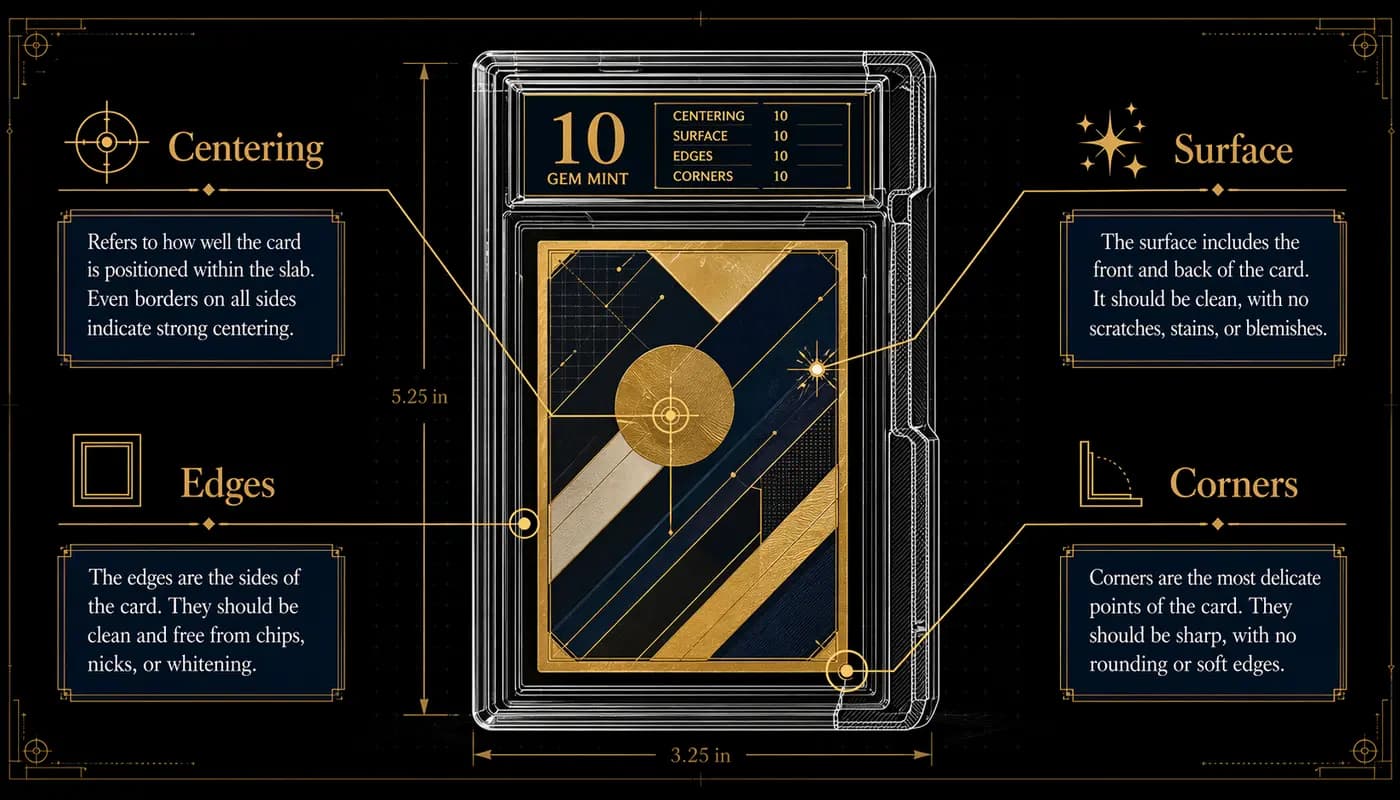
Every card is scored on four independent attributes. Your overall grade is the composite — weighted to match how professional graders evaluate condition.
Centering
How well the card image is positioned within the borders. Even margins on all four sides indicate strong centering — the closer to 50/50, the higher the potential grade.
Surface
Front and back condition — scratches, print defects, stains, and any wear across the playing surface. Flawless surface is essential for any Gem Mint score.
Edges
The condition of all four sides. We check for chipping, whitening, and any nicks along the cut lines — common failure points for older sets.
Corners
Often the most fragile part of a card. Corners must be sharp and free from rounding, fraying, or soft edges to earn a top grade.
Deep Dive
Centering Explained
The ratio of margin on either side of the card. 50/50 is perfect — the more off-center the card, the lower the ceiling on its grade.
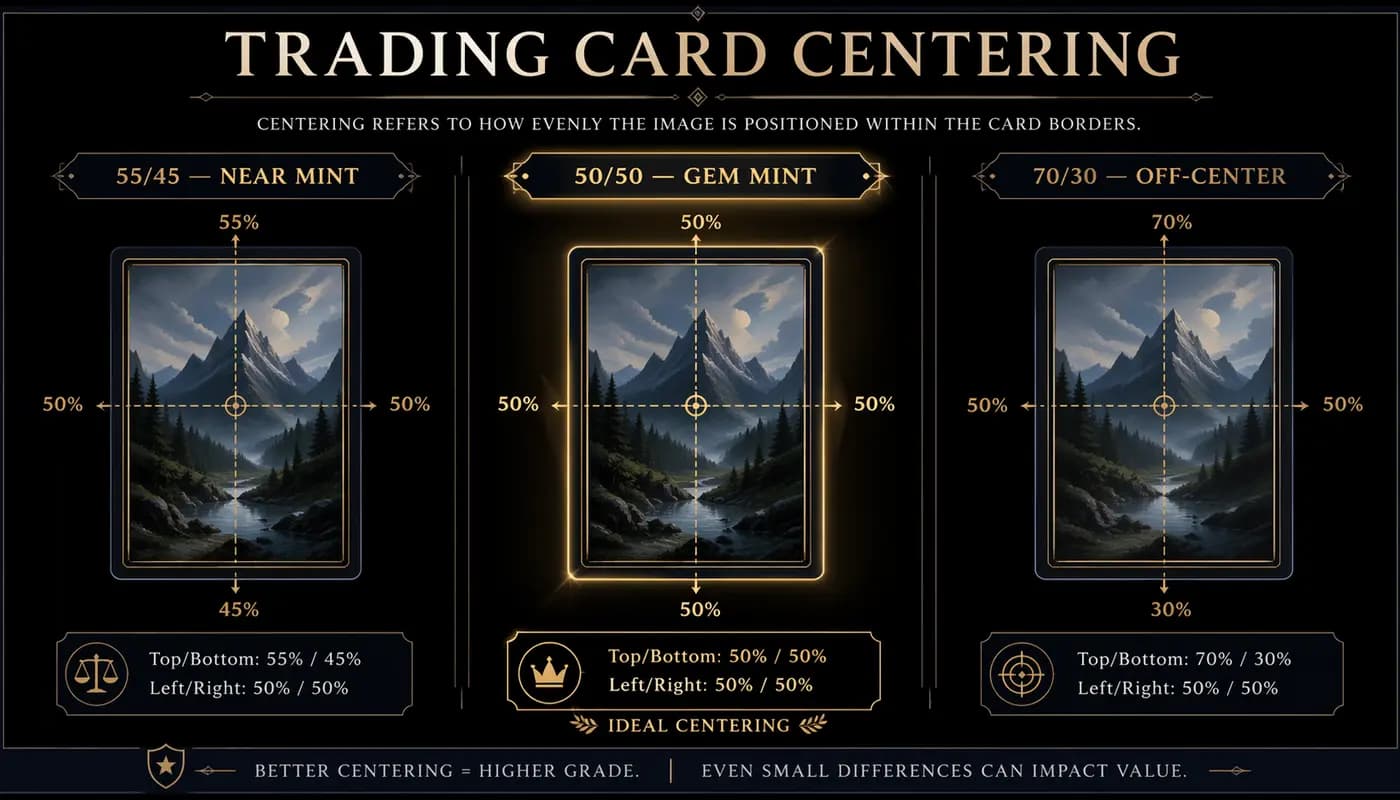
- 50/50IdealEqual margins on both axes. What a Gem Mint 10 looks like.
- 55/45Still 10-eligiblePSA's published limit for front centering on a 10. Tighter than most people assume.
- 60/40Caps you lowerUsually the difference between a 9 and a 10 once everything else is clean.
- 70/30Off-centreVisible to the naked eye and hard to recover from, however good the surface is.
The Scale
From 10 to 1
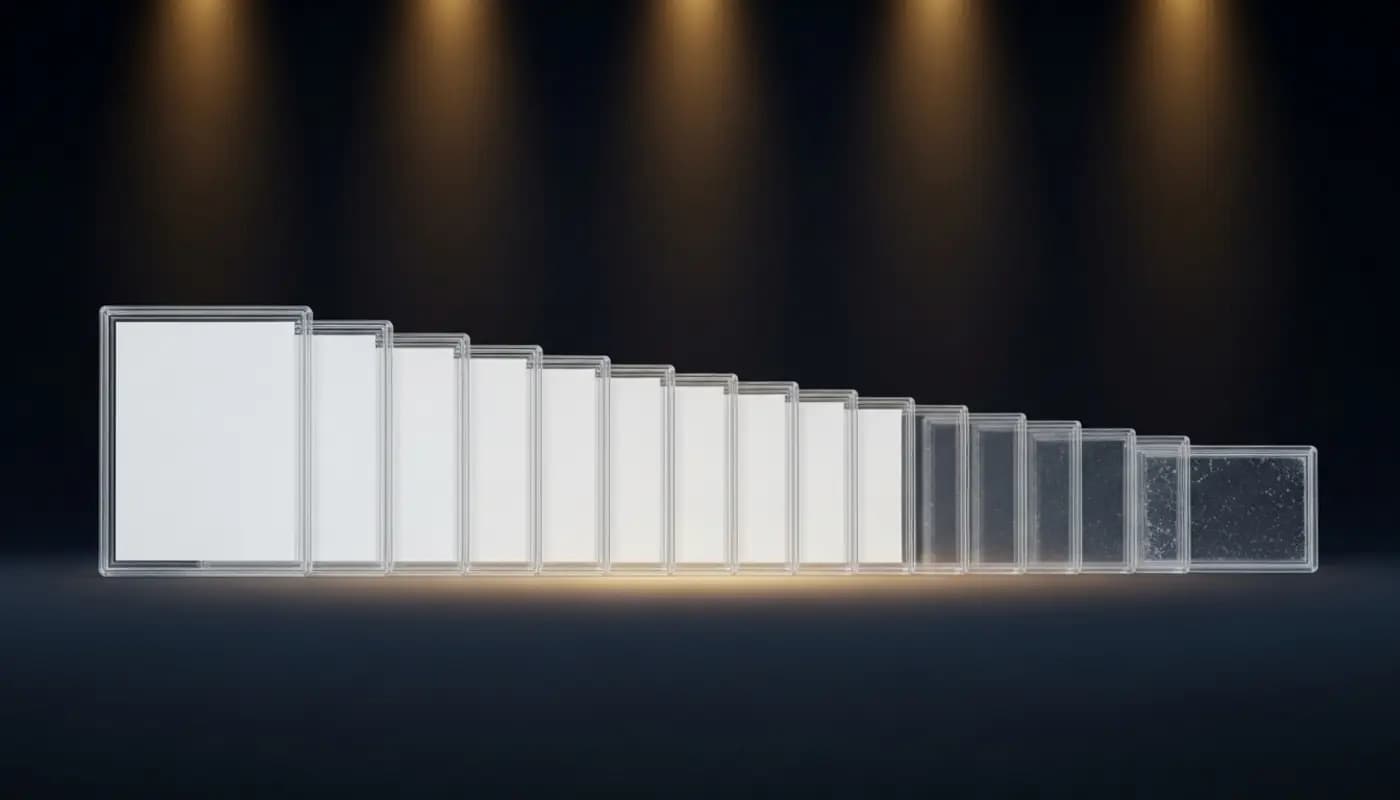
We use the same 1–10 scale as major grading services so your MasterGrade result is directly comparable to PSA, BGS, and CGC outcomes.
Gem Mint
Flawless. No visible defects under 10× magnification.
Mint+
Near-perfect with the tiniest imperfection, often invisible to the naked eye.
Mint
Sharp and clean with one very minor flaw — still highly collectible.
Near Mint-Mint
Fresh-looking with light wear on one or two attributes.
Near Mint
Strong eye-appeal with modest print or surface flaws.
Excellent-Mint
Mild handling wear visible on careful inspection.
Excellent
Noticeable edge or corner wear; original gloss mostly intact.
Very Good-Excellent
Played condition with clear surface or corner wear.
Very Good
Well-loved — rounding, creasing, or print loss visible.
Good
Heavily played but intact. No missing pieces.
Poor
Severely damaged. Tears, heavy creasing, or surface loss.
Why It Matters
The Grade Defines the Value
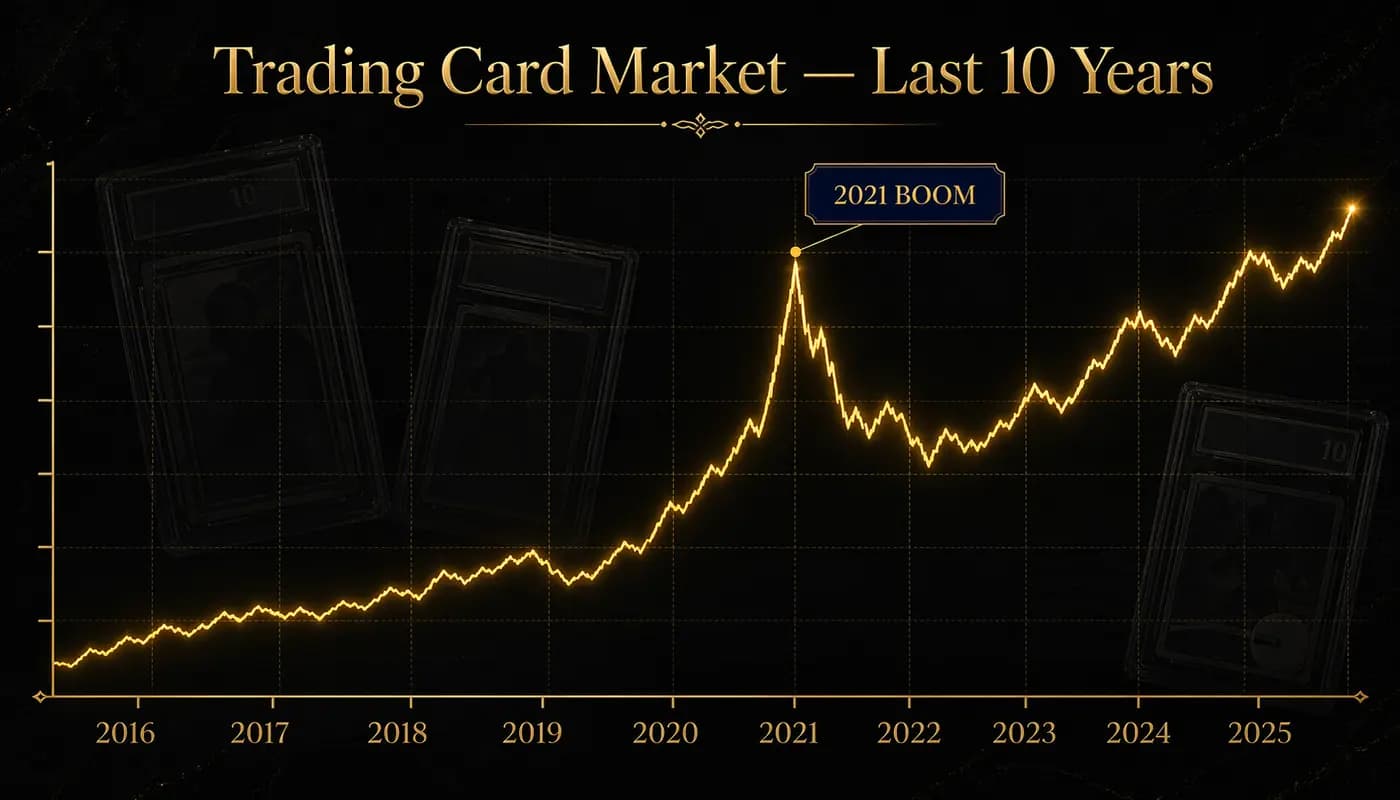
A single number on a slab can be the difference between a $5 card and a $500 one. The trading-card market has grown dramatically over the past decade — condition is the currency.
Ready to grade your first card?
Your first scan is free. No credit card required.