
CGC Card Grading Review: How It Compares to PSA and BGS
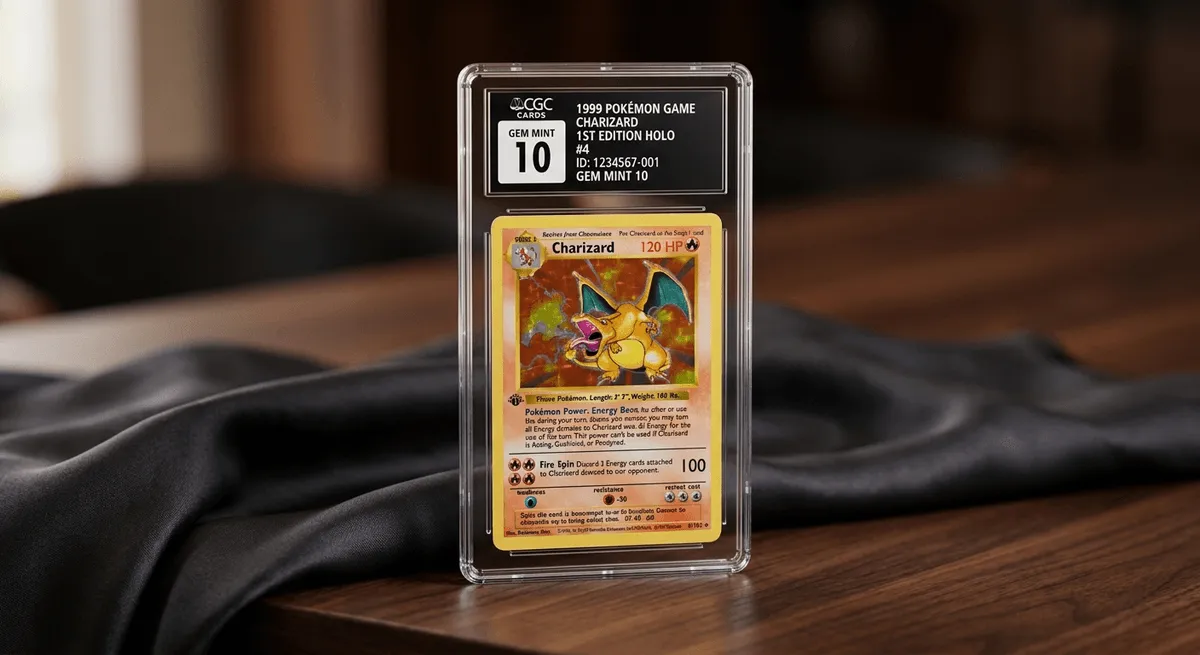
Last reviewed: April 2026. Service information, grading standards, and market context were checked against current hobby guidance and official source pages where applicable.
CGC has moved from —œinteresting alternative— to firmly established major grader in the card world. It still trails PSA in broad resale power and Beckett in top-end mystique, but it has carved out a serious niche by being consistent, relatively transparent, and especially credible in Pokemon. If you are deciding whether to use CGC in 2026, the real question is not whether it is legitimate. It is. The real question is whether its strengths line up with your cards and your goals.
What Is CGC Cards?
Certified Guaranty Company was founded in 2003 in Sarasota, Florida, and originally built its reputation in adjacent collectibles categories such as comics, coins, and paper money through the wider Certified Collectibles Group ecosystem. That legacy matters because CGC entered trading cards with an existing culture of authentication, encapsulation, and condition discipline rather than trying to build credibility from scratch.
As the trading card boom accelerated, CGC expanded aggressively into Pokemon, sports, and TCG submissions. Its card division evolved quickly, and later corporate changes involving Metallic Group helped position the brand more competitively in the broader grading marketplace. The visual identity changed, the slabs improved, and collectors who initially dismissed CGC as a newcomer started taking it much more seriously.
Today, CGC sits alongside PSA and BGS as one of the hobby—™s major grading names. It may not lead every category, but it is firmly in the conversation, especially for collectors who want a reputable slab with a strong authentication backbone.
The CGC Grading Scale
CGC uses the familiar 1 to 10 scale, which makes it easy for collectors to compare against PSA and BGS at a high level. A CGC 8, 9, or 10 broadly communicates what you think it communicates: lower wear at the top, more visible flaws lower down. That said, CGC—™s internal feel can be a little stricter than casual submitters expect, particularly when chasing the uppermost labels.
At the top, collectors usually distinguish between a standard CGC 10 and a more elite CGC Pristine 10. The practical market meaning is similar to the distinction between an ordinary gem-mint result and a truly exceptional copy. A standard CGC 10 can compete with PSA 10 and BGS gem-level outcomes, while Pristine 10 is positioned as a harder achievement requiring near-flawless performance across the board.
This structure gives CGC an interesting middle position. It is simpler than Beckett—™s most famous sub-grade-centric culture, but it still creates a recognizable premium tier above the standard top label. For collectors who want meaningful separation without Beckett-level complexity, CGC can feel like a useful compromise.
CGC vs PSA — Which Is Harder?
In hobby conversation, CGC is often considered slightly harder than PSA at the top grade, especially on centering and certain categories of visual cleanliness. That does not mean every individual card will grade lower at CGC, and there are plenty of anecdotal counterexamples. But the market perception is that PSA is more generous in some circumstances, while CGC can be a touch less forgiving when a card falls between very strong and truly pristine.
That difference creates an interesting pricing dynamic. PSA 10s usually trade more easily because the PSA buyer base is enormous and well-established. CGC 10s, however, sometimes earn a premium when buyers believe the stricter grade deserves extra respect, especially in Pokemon. The trade-off is liquidity. A CGC slab may appeal strongly to informed collectors, but the average buyer will still often default to PSA simply because the label is more familiar.
For submitters, the practical takeaway is to be realistic. If your card is a borderline top-grade candidate and you care most about resale speed, PSA may still be the smoother path. If you want a label some collectors view as a tougher test, CGC becomes more attractive.
What CGC Does Best — The Pokemon Niche
Pokemon is where CGC has earned some of its strongest goodwill. Many collectors view CGC—™s Pokemon grading as reliable, consistent, and serious about modern card evaluation. The slabs present well, the population data is useful, and the brand has invested heavily in being taken seriously by Pokemon buyers rather than treating the category as an afterthought.
This matters because Pokemon is a market where aesthetics, authenticity, and condition precision all interact at once. Collectors do not just want a number; they want confidence that the card is real, properly identified, and accurately preserved. CGC—™s background in other authentication-heavy collectibles gives it an edge in perception here. It feels methodical, which plays well with Pokemon collectors spending meaningful money on vintage holos, trophy-style promos, and high-grade modern chase cards.
CGC is especially appealing for collectors who are building a personal collection rather than optimizing every slab for maximum immediate resale. If you like the holder, trust the company, and value the authentication-first reputation, CGC can be one of the most satisfying homes for a Pokemon card.
CGC Authentication — The Key Differentiator
Authentication is one of CGC—™s clearest differentiators. While all major grading companies vet cards, CGC has leaned harder into the idea that every submission is being explicitly examined for genuineness as part of the process. That matters more in 2026 than it did a few years ago because counterfeit technology, altered stock, and resealed-product-derived fraud have all become more sophisticated.
The CGC Authentic label gives collectors an option when a card is genuine but not suitable for a numeric grade, whether because of damage, alteration questions, or other condition complications. That can be extremely useful for rare promos, misprints, or oddball collectibles where confirmation of legitimacy matters more than a tidy number. It also helps preserve value in situations where a card might otherwise be hard to sell with confidence.
CGC has also built goodwill by catching counterfeits and suspicious submissions that less experienced buyers might miss. No company is infallible, but the hobby generally respects CGC—™s authentication posture. If counterfeit risk is part of your concern, that alone may justify choosing CGC for certain cards.
CGC Submission Process and Pricing (2026)
CGC—™s pricing in 2026 typically lands slightly below PSA at comparable entry points, which is one reason budget-conscious collectors keep it in the rotation. An economy tier around $18 per card remains attractive for lower-value submissions. A regular tier around $65 per card fits more serious cards, while faster express-style service can reach roughly $150 per card. Walkthrough or premium fast-lane handling can climb to $300 per card for urgent high-value pieces. Confirm current service names and live pricing on CGC's site before mailing a large batch.
The submission process itself is generally straightforward: account setup, card entry, declared value, packaging, shipment, and online status tracking. The real decision is strategic. Cheaper fees do not automatically make CGC the right choice if PSA—™s resale multiple would offset the extra cost. On the other hand, if you value authentication, like the holder, and are sending Pokemon cards where CGC is well respected, the price-performance balance can be excellent.
As always, current service times should be treated as moving targets. Before submitting a large batch, check live turnaround reports rather than relying on static marketing copy. The best pricing model in the world does not matter if your cards sit longer than your business plan allows.
CGC Known Quirks
CGC slabs are instantly recognizable because of their blue visual identity, which some collectors love and some still find less iconic than PSA—™s familiar label. That aesthetic split is real. Holder preference is emotional, and emotion affects resale more than many investors want to admit. Still, the slab itself is solid, clear, and increasingly accepted across the hobby.
One of CGC—™s strengths is its searchable population data. Being able to verify how many examples exist at a certain grade gives collectors a stronger sense of scarcity, especially for niche Pokemon promos and lower-pop sets. That transparency adds value because it lets buyers separate genuine rarity from seller hype.
The most common market complaint is that CGC sometimes grades a little differently than PSA on equivalent cards, which can create awkward price comparisons. But that is not unique to CGC; every grading crossover debate has the same problem. The important thing is understanding that a CGC slab is its own market signal, not just a discounted PSA substitute.
FAQ
Is CGC a trusted grading company?
Yes. CGC is widely recognized as one of the major grading companies and has built a strong reputation, especially in Pokemon and authentication-sensitive categories.
Does CGC grade harder than PSA?
Many collectors believe CGC is slightly tougher at the top end, particularly on pristine-level outcomes, though individual results can vary.
Do CGC cards sell for less than PSA cards?
Often they do in broad market terms, but certain CGC 10 or Pristine 10 cards can command strong premiums with informed buyers.
What is CGC Authentic?
It is a label confirming a card is genuine even when it is not receiving a standard numeric grade.
When should I choose CGC?
Choose CGC when authentication matters, you like the holder, you are grading Pokemon, or the fee structure fits your submission strategy better than PSA or BGS.
Want to avoid sending weak candidates to CGC? Start with /grade and pre-screen your cards before you pay submission fees.
Want to know if your card is worth grading before you pay submission fees?
Try MasterGrade AIRelated Articles
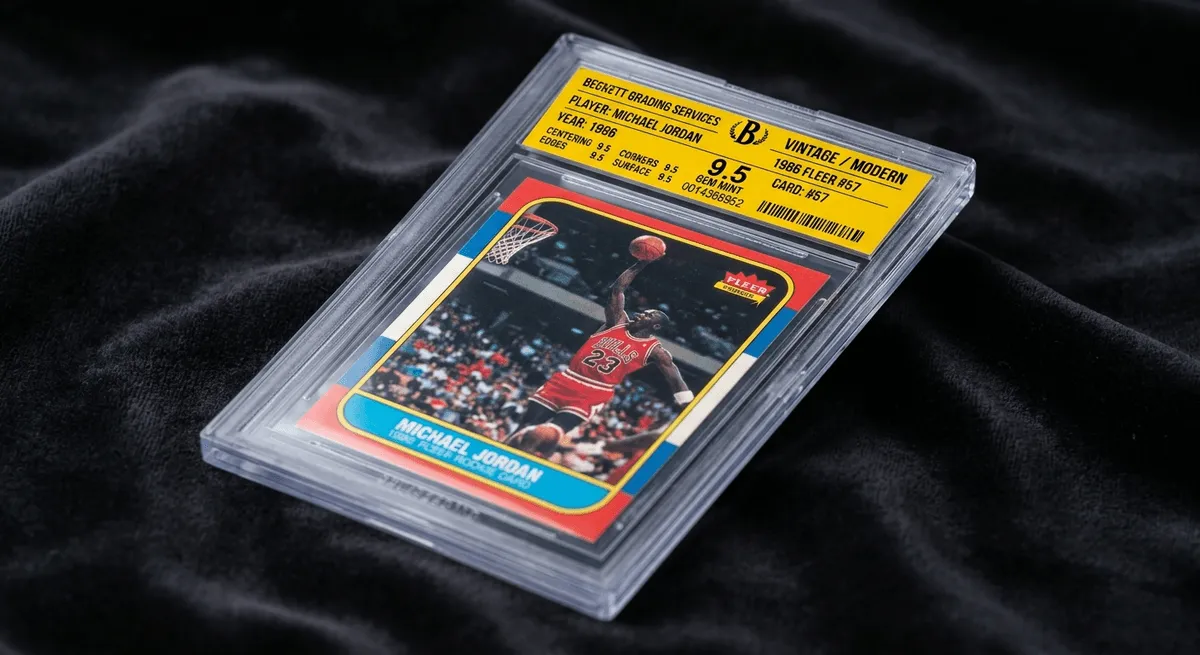
Beckett Grading Services (BGS) Review: Is It Worth It in 2026?
A practical 2026 guide to BGS grading, subgrades, resale value, turnaround expectations, and when Beckett makes sense over PSA or CGC.
April 1, 2026 · 8 min read
Day 1 of the 2026 Pokémon Los Angeles Regional Championships now underway featuring Pokémon VGC, Pokémon TCG and Pokémon GO events, tune in to the official livestream feeds here
The 2026 Pokémon Los Angeles Regionals are underway! Learn what this means for card collectors and how MasterGrade AI grading can help maximize value.
May 9, 2026 · 2 min read
Day 1 of the 2026 Pokémon Los Angeles Regional Championships now: what it means for collectors
Day 1 of the 2026 Pokémon Los Angeles Regionals is underway! Learn how the event impacts card values and your collection. Grade smarter with MasterGrade.
May 9, 2026 · 4 min read
Pokémon TCG: Mega Evolution — Chaos Rising launch promo features Ho-Oh, Keldeo and Delphox cards at select retailers
New Pokémon TCG "Mega Evolution — Chaos Rising" promo featuring Ho-Oh, Keldeo, and Delphox cards is here! Learn how it impacts card collectors!
May 9, 2026 · 2 min read