
What Cards Are Not Worth Grading? A Collector Reality Check
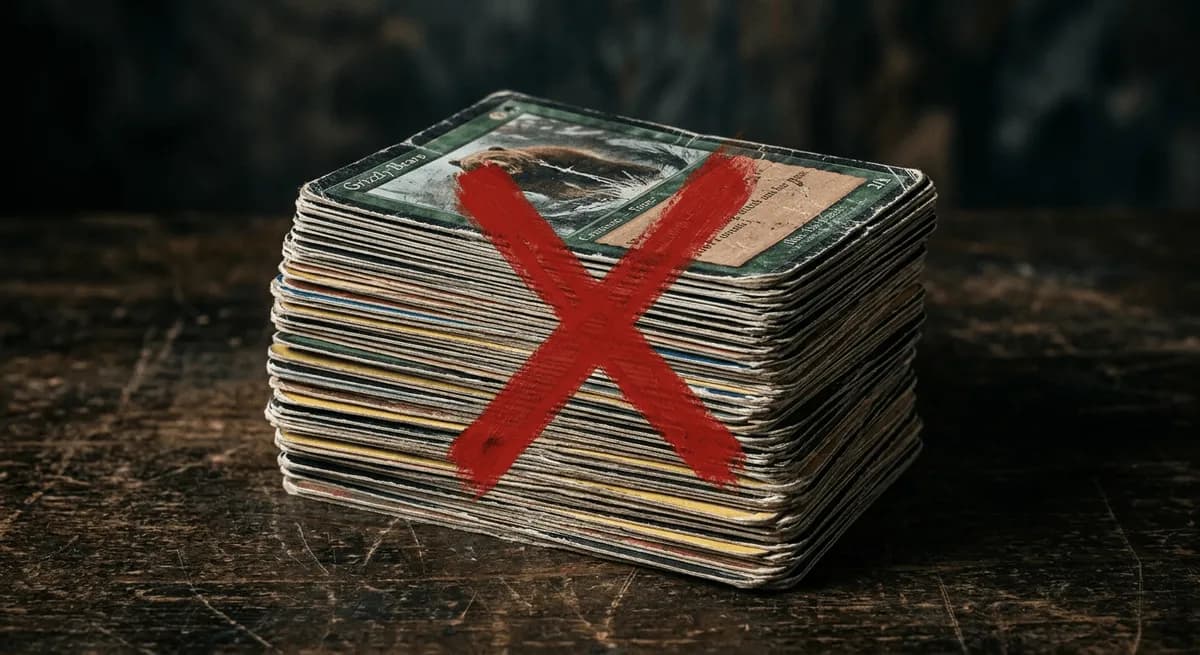
The easiest way to improve a submission is learning what to leave out. Most grading regret starts with cards that never had enough upside.
Last reviewed: April 2026. Service information, grading standards, and market context were checked against current hobby guidance and official source pages where applicable.
Collectors spend a lot of time hunting "worth grading" cards and not enough time building a rejection filter. A bad submission usually comes from one of three problems: weak market spread, visible flaws, or unrealistic expectations about the likely grade. If the card needs everything to go perfectly just to break even, it is usually a skip.
Cards that usually fail the math
Low-value base cards
If the graded upside barely clears fees, the submission is weak.
Cards with dents, creases, or surface damage
These rarely justify normal grading economics.
Overprinted modern hits
Big populations can crush premium spreads fast.
Copies with visible whitening or corner wear
Desirable card, maybe. Strong submit, usually not.
Emotion-driven picks
Your favorite card can deserve protection, but that is a collection reason, not an ROI reason.
Speculation with no price context
If you do not know the likely outcomes, you are guessing.
Watch for grade sensitivity
Some cards only make sense if they hit Gem Mint. That means one print line, one corner touch, or one centering issue can wipe out most of the upside. If the submission becomes bad the moment the card misses a 10, treat it as fragile ROI and reject more aggressively.
A better rejection filter
- Confirm the card has real market demand.
- Check the likely raw-versus-graded spread.
- Reject anything with obvious structural damage.
- Reject anything where one grade lower ruins the economics.
- Only then build your actual submission pile.
If you want a faster first pass, use Master Grade to screen condition and compare plan costs on /prices before you ever touch a Card Saver.
Good reasons to grade anyway
Not every grading decision needs to be profit-driven. Personal collection slabs, long-term protection, and registry goals are all real reasons. Just be honest about the goal. "I want this protected" is a better reason than pretending a weak submission is secretly great math.
The cards you reject save you the most money.
Sharper rejection discipline leads to a much stronger submission stack.
Related: Which Cards Are Worth Grading?, Grading ROI Decision Tree, and Should You Grade Your Cards?
Related Articles
Which Cards Are Worth Grading? A Decision Framework
Not every card is worth the $30+ grading fee. Learn the value thresholds, condition cutoffs, and market signals that make a card worth submitting.
March 31, 2026 · 7 min read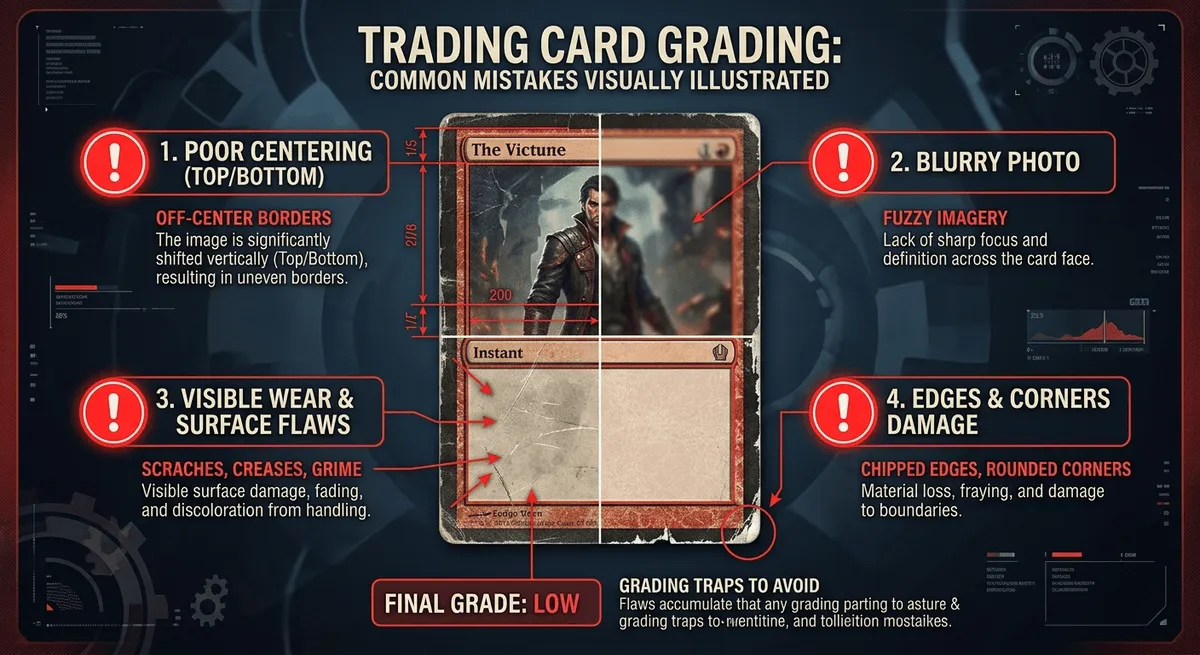
Common Card Grading Mistakes to Avoid Before You Submit
The avoidable errors that waste grading fees: weak screening, bad photos, wrong service choice, sloppy packing, and emotion-driven submissions.
April 1, 2026 · 8 min read
When to Submit Cards for Grading: Timing, Market, and Condition
A practical timing framework for grading decisions based on card condition, market window, fee structure, and downside risk.
April 1, 2026 · 7 min read
Should You Grade Your Cards? A Decision Framework for Collectors
Grading costs $15–$150 per card. Sometimes it doubles your value. Sometimes it destroys it. A five-variable decision tree for every submission.
April 1, 2026 · 8 min read