
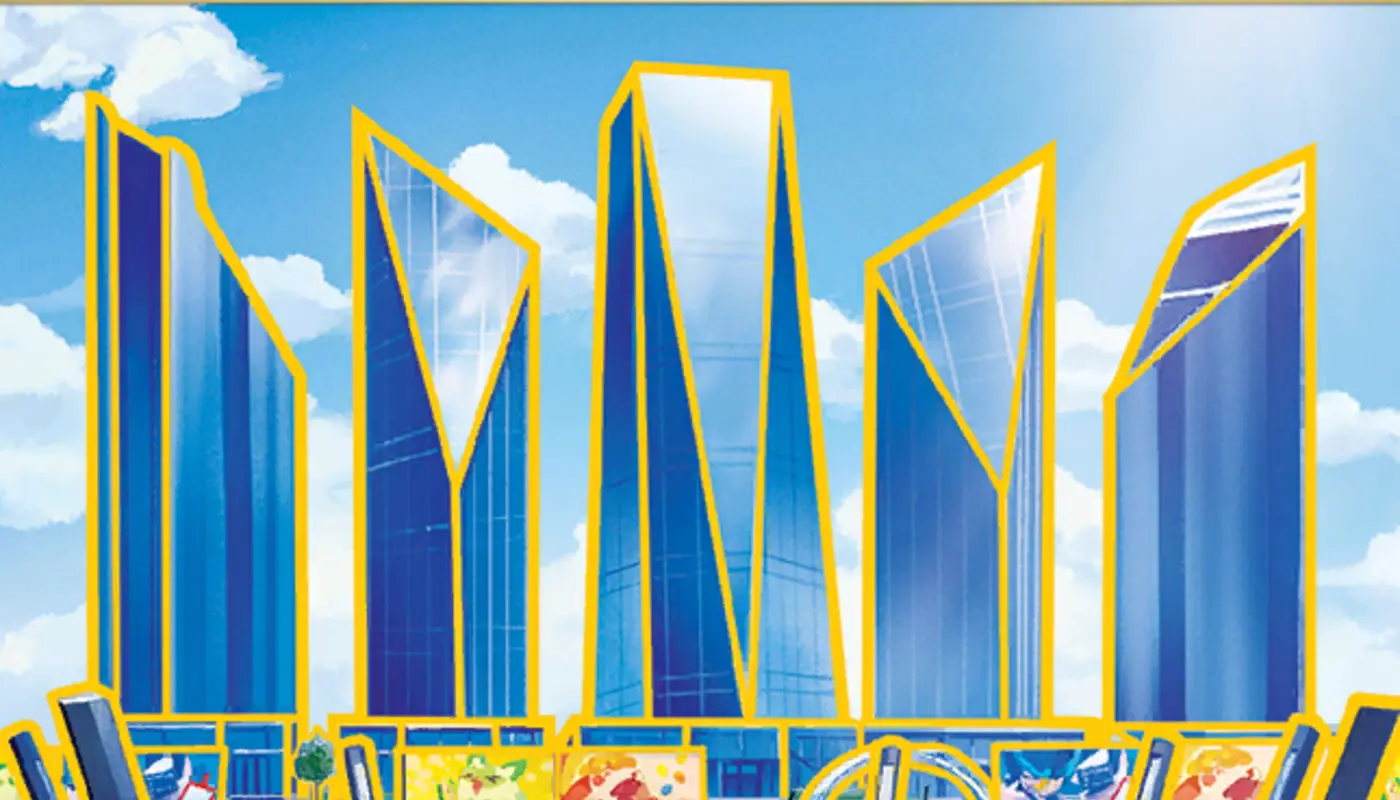
The Pokémon Company gives close look at the art of the Pokémon TCG: what it means for collectors
The Pokémon Company's Unprecedented Deep Dive into Art: A New Era for Collectors
The Pokémon TCG landscape is rapidly evolving, and a recent announcement from The Pokémon Company (TPC) has sent ripples through the collector community. On June 3, 2026, The Pokémon Company gave a close look at the art of the Pokémon TCG, specifically highlighting the intricate design and production process behind the highly anticipated Mega Evolution Chaos Rising expansion. This unprecedented transparency, detailed on the official Pokémon Blog, marks a pivotal moment, shifting the focus towards the artistic integrity and subtle nuances that define our cherished cards.
For collectors, this isn't merely an artistic appreciation seminar; it's a direct signal that the aesthetic quality and precision of card art are more critical than ever before. This deep dive into TPC's art philosophy, covering everything from initial concept sketches to final print quality, directly impacts how cards will be viewed, graded, and valued moving forward. As the market continues to mature and demand for pristine examples grows, understanding these newly emphasized artistic benchmarks is no longer optional—it's essential.
What The Pokémon Company's Announcement Entails
The June 3rd announcement regarding the Mega Evolution Chaos Rising expansion revealed a level of detail previously unseen from The Pokémon Company. TPC meticulously showcased the journey of a card's artwork from conceptualization to its physical manifestation. Key revelations included:
- Artist Intent & Design Philosophy: TPC emphasized the specific artistic direction given to illustrators, highlighting how character expressions, environmental details, and dynamic poses are carefully crafted to convey narrative and power within the card frame. This includes a spotlight on the precise color palettes and textural elements chosen to evoke specific moods.
- Production Precision Standards: The announcement detailed the rigorous quality control measures in place to ensure that the printed card art accurately reflects the artist's original vision. This includes discussions on print registration, color consistency across print runs, and the meticulous application of holographic foils and textures for Secret Rare and Full Art cards.
- Focus on Subtle Details: TPC's presentation zoomed in on elements often overlooked by the casual observer—minor background elements, intricate Pokémon features, and the interplay of light and shadow—demonstrating their intentional design and importance to the overall piece.
This move underscores a significant trend: the increasing convergence of fine art appreciation with TCG collecting. By providing this "close look," TPC is educating its audience on what constitutes a perfect representation of their artistic vision, implicitly setting a new bar for what collectors should expect and what graders should evaluate.
Impact on Collectors and Grading Standards
The immediate and long-term implications for collectors and grading are substantial. When The Pokémon Company itself highlights specific artistic and production nuances, these elements invariably become points of increased scrutiny in the secondary market and within professional grading services.
#### Enhanced Scrutiny on Art Details
Collectors and graders will now approach cards with a heightened awareness of artistic fidelity. Previously, minor print imperfections or subtle misalignments might have been overlooked if not overtly obvious. However, with TPC's emphasis on meticulous detail, these elements now carry greater weight.
- Artistic Integrity: Collectors are increasingly seeking cards that perfectly capture the artist's intent, free from print defects that detract from the visual narrative. This means a sharper focus on crisp lines, accurate color saturation, and the absence of smudges or ink splatters.
- Centering vs. Art Placement: While physical centering has always been paramount, TPC's deep dive suggests an emerging appreciation for how the Pokémon itself is framed within the art box, regardless of the card's physical borders. A perfectly centered card could still be less desirable if the primary subject within the art box is awkwardly positioned due to an artistic decision or a subtle printing shift.
#### Subgrades and Print Quality
This announcement directly influences how professional grading companies like PSA, BGS, and CGC evaluate cards, particularly concerning subgrades related to print quality and surface condition.
- PSA's Surface Grade: According to PSA's official grading standards, the "Surface" subgrade assesses print defects, scratches, indentations, and gloss. TPC's focus on print precision means that even minute instances of roller lines, factory print dots, or slight color inconsistencies, which might have previously resulted in a PSA 9, could now push a card towards a PSA 8 if they significantly compromise the art's integrity as defined by TPC.
- BGS's Surface and Print & Centering Grades: Beckett Grading Services (BGS) utilizes "Surface" and "Print & Centering" subgrades. The "Print & Centering" grade directly addresses print registration and quality. TPC's revelations empower BGS graders with a clearer framework for what constitutes optimal print quality, leading to more stringent evaluations of ink consistency, dot matrix patterns, and holographic application.
- CGC's Surface and Print Quality Grades: CGC Cards (formerly Certified Guaranty Company) explicitly includes a "Print Quality" subgrade, which assesses "issues such as print lines, color consistency, and print registration." This subgrade will become particularly critical. Any deviation from the high standards of artistic reproduction highlighted by TPC will likely result in lower scores in this category.
For collectors, this means understanding that a card's technical condition (e.g., corners, edges) is only one part of the equation. The artistic condition, as dictated by TPC's increasingly transparent standards, is equally vital for achieving top grades.
#### A Concrete Example: Mega Charizard X (Full Art) from Mega Evolution Chaos Rising
Consider the highly sought-after Mega Charizard X (Full Art, Secret Rare) from the new Mega Evolution Chaos Rising set. Based on Q1 2026 auction data for similar chase cards, a pristine PSA 10 copy could fetch approximately $800-$1200.
Now, imagine two copies of this card, both appearing visually perfect to the untrained eye.
- Card A: Features vibrant colors, sharp lines, and perfect centering. However, upon closer inspection, a tiny, almost imperceptible print dot is visible within Charizard's flame, a detail that TPC specifically highlighted as an unwanted anomaly in their production standards.
- Card B: Also features vibrant colors and sharp lines, but the holographic texture on Charizard's wings shows a subtle, almost microscopic, shift in its pattern, deviating from the intended artistic flow showcased by TPC.
Prior to TPC's announcement, both cards might have had a strong chance at a PSA 10, or perhaps a PSA 9 if the grader was particularly stringent. However, armed with TPC's detailed insights, a grader is now more likely to penalize these subtle print deviations. Card A might receive a PSA 9 due to the print dot impacting the "Surface" grade, while Card B could be a BGS 9.5 with a 9 for "Print & Centering" due to the holographic shift. The perceived value gap between a perfect example of artistic reproduction and one with a subtle flaw, now illuminated by TPC, will widen significantly.
The Role of AI in Art-Centric Grading
Navigating these new, more granular grading criteria for artistic and print quality can be challenging for even experienced collectors. This is where AI-powered platforms like MasterGrade become indispensable. Our technology is designed to identify and analyze the minute details that now carry increased weight.
Instead of paying $30+ for a submission only to discover a subtle print flaw, use MasterGrade's free AI grader as your essential first step. Our AI can quickly pre-screen your cards for specific imperfections that TPC's recent focus has brought to the forefront, such as print dots, roller lines, color inconsistencies, and even subtle centering shifts within the art box. This allows you to make informed decisions about which cards are truly submission-worthy, saving you time and money.
What Collectors Should Do Next
Given this significant shift, here are concrete steps every serious Pokémon TCG collector should take:
- Review Your Collection with a New Eye:
- Focus on Surface & Print Quality: Re-examine your high-value and potential submission-grade cards under strong, direct light. Look for any print lines, ink splatters, color banding, or inconsistent holographic patterns that you might have previously overlooked.
- Examine Artistic Fidelity: Compare your cards to high-resolution images of the official artwork (where available) to spot any print deviations from the artist's original intent. Pay particular attention to the intricate details TPC highlighted in their announcement.
- Centering Beyond Borders: While external centering is crucial, also assess how the main Pokémon or subject is framed within the art window. Subtle shifts can impact perceived artistic quality.
- Educate Yourself on TPC's New Insights:
- Study the Mega Evolution Chaos Rising Art: Even if you don't collect this specific set, the principles TPC outlined for Mega Evolution Chaos Rising are likely to apply across future expansions. Understand the examples of "ideal" and "sub-optimal" print quality they may have presented.
- Follow Official Channels: Stay updated on any further communications from The Pokémon Company regarding art and production standards.
- Leverage Grading Tools Proactively:
- Utilize AI Pre-screening: Before sending any card to a professional grader, use MasterGrade's free AI card grader. Our AI
Get card-grading tips & market news
Join collectors getting our best grading guides, value alerts, and set breakdowns. A few emails a month — no spam.
Stay in the loop
Get notified about new features, grading tips, and market updates.
Related guides
Pokémon TCG: Mega Evolution — Chaos Rising launch promo features: what it means for collectors
The Pokémon TCG Mega Evolution Chaos Rising launch promos are here! Learn how to acquire, assess, and grade these valuable Ho-Oh, Keldeo & Delphox cards.
GuideThe Pokémon Company showcases new and upcoming collections containing: what it means for collectors
*Mega Evolution: Chaos Rising* is here! Learn what this means for collectors, grading, card values, and how to prepare your submissions. Expert guide!
GuideNintendo points out how Mega Raichu X looks like an X and Mega Raichu: what it means for collectors
Nintendo's Mega Raichu X/Y announcement impacts Pokémon card collectors! Learn what it means for grading, values, and what steps to take now.
Grade your cards with AI
Upload a photo and get an instant condition grade with sub-scores and estimated values.
Grade a card free