
What Is a Mint Condition Card Worth? Complete Value Guide
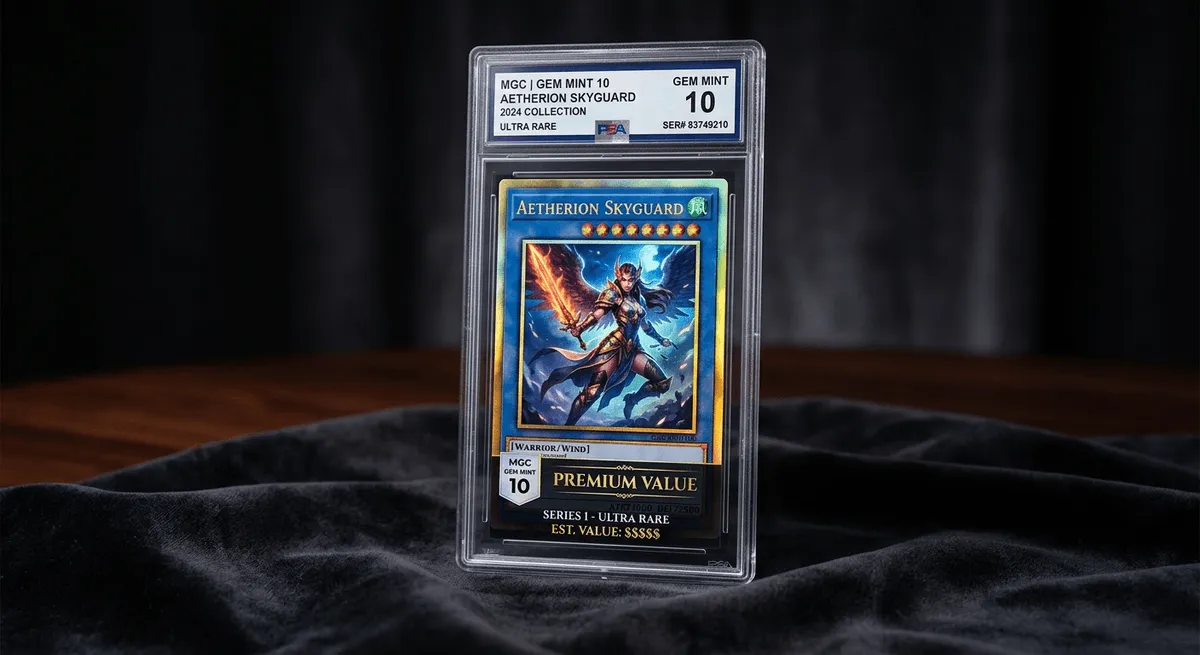
Last reviewed: April 2026. Service information, grading standards, and market context were checked against current hobby guidance and official source pages where applicable.
—œMint condition— is one of the most abused phrases in the entire collectibles market. Sellers use it casually, buyers assume it means flawless, and then everybody is confused when the card comes back a PSA 7 or 8. In real grading terms, mint is not a vibe. It is a narrow condition band with major pricing consequences. On the right card, the jump from raw —œlooks clean— to PSA 9 or PSA 10 can mean hundreds, thousands, or even six figures in additional value.
What Does —œMint Condition— Actually Mean?
In everyday marketplace language, mint often just means —œbetter than average.— A seller on eBay might call a card mint because it was sleeved immediately, has no obvious creases, and looks attractive in photos. Professional grading is much stricter. A true mint card must survive close inspection on centering, corners, edges, and surface. That means no distracting print lines, no hidden whitening, no sleeve scratches, and no small corner touches that casual sellers tend to ignore.
This is why the difference between PSA 10 and PSA 8 or 9 matters so much. A buyer paying for a slab is paying for certainty, not optimism. A card that looks flawless from arm—™s length may still fall short of gem mint because of one rough edge or a tiny factory ding. On desirable cards, that single flaw can erase hundreds or thousands of dollars in potential value. The phrase —œmint condition— therefore only matters if you define it with a grading standard attached.
The biggest misconception is that marketplace mint equals graded mint. It usually does not. Raw listings systematically overstate condition because sellers are incentivized to describe the best-case scenario. Grading companies are paid to do the opposite: standardize the worst-case details a buyer should know. If you want real pricing accuracy, think in grade ranges, not adjectives.
PSA Grading Scale for Mint Condition
PSA—™s scale runs from 1 to 10, but most value conversations cluster tightly at the top. A PSA 10 Gem Mint card is the dream outcome. It represents a card that is exceptionally well preserved, with extremely strong eye appeal and virtually no meaningful defects under normal examination. It is not literally —œperfect in every way— under a microscope, but in hobby terms it is the best practical grade most cards will ever receive.
A PSA 9 Mint card is near-perfect. It may have one minor issue such as slightly imperfect centering, a tiny print spot, or a subtle touch that keeps it from gem mint. A PSA 8 Near Mint-Mint card can still look excellent in hand, which is why many collectors love buying PSA 8s for personal collections. The problem is not beauty; it is pricing. Once a card drops out of the PSA 10 tier, market premiums compress quickly unless the card is so scarce that any graded copy is desirable.
High-end collectors chase 10s because top-pop scarcity drives status and resale value. That is why a PSA 10 can sell for five to ten times the price of a PSA 9 on iconic cards. The closer a market gets to trophy territory, the more money concentrates in the top label. In other words, —œmint— is not a single bucket. It is a hierarchy, and each rung has a dramatically different payoff.
Mint Condition Pokemon Card Values
Pokemon provides the clearest example of how condition multiplies value. The classic benchmark is Base Set Charizard. A PSA 9 version may live around the mid-five-figure range, while a PSA 10 can push into six figures depending on era, demand, and exact market conditions. That spread is not just about nostalgia. It reflects how few early English Charizards survive with gem-level centering, corners, and surface quality. Top-condition copies are truly scarce.
The same principle applies to modern cards, just at smaller price bands. A modern alternate-art Pokemon card that sells raw for around $50 can often jump to $300, $500, or more in PSA 10 if the set is popular and the print quality is inconsistent enough to make top grades meaningful. TCGPlayer raw prices tell only part of the story because they blend near-mint cards with a wide range of actual conditions. The slab market separates those conditions cleanly and rewards truly premium copies.
For Pokemon collectors, the key insight is that grading works best when raw prices are supported by strong character demand and population scarcity at the top grade. A random $8 ultra rare described as mint rarely becomes a profitable slab. A clean Umbreon, Charizard, or sought-after promo with proven PSA 10 demand absolutely can. The better the card—™s long-term collector appeal, the more valuable precise condition becomes.
Mint Condition MTG Card Values
Magic: The Gathering adds another layer because age and handling history matter even more. Alpha and Beta cards, especially Power 9 pieces, can show enormous value gaps between mint and heavily played copies. Corners, edge wear, and surface gloss are critical because older MTG cards often spent real time in decks before collectors treated them as investment pieces. A clean vintage MTG card is not just nicer; it is substantially rarer.
Revised dual lands demonstrate the same condition spread on a broader scale. Played copies are liquid because players still want them for decks, but sharp near-mint or graded examples command a collector premium that sits above pure play utility. The more iconic the land, the more buyers care about surface cleanliness and edge integrity. Even a small shift from played to mint can create a major price difference because supply thins out quickly at the top end.
Modern MTG also sees mint premiums, though usually in a narrower band. Cards like Tarmogoyf and Snapcaster Mage have historically commanded better prices in pristine condition, especially early printings and premium foils. Still, grading modern MTG generally works best when you have a true standout copy of a culturally important card, not just a card that was expensive during Standard season.
Mint Condition Yu-Gi-Oh! Card Values
Yu-Gi-Oh! can be even more condition-sensitive because print quality, scratches, and edge wear are notorious across multiple eras. The classic Blue-Eyes White Dragon from Legend of Blue Eyes is a perfect case study. A pristine first-edition copy can command staggering numbers in top grades, while played or unlimited versions live in entirely different value brackets. The artwork may be the same, but the market treats them as fundamentally different assets.
First Edition versus Unlimited is especially critical in Yu-Gi-Oh! because edition marks create a built-in scarcity hierarchy before condition is even considered. Once you stack a first-edition stamp with true mint preservation, prices can separate violently from raw market averages. Conversely, a worn unlimited copy may still be nostalgic, but it will not behave like an investment-grade collectible. That distinction trips up new sellers all the time.
Because Yu-Gi-Oh! cards are prone to foil scratching and edge chips, the —œmint— label should be used carefully. Many raw listings that claim mint would struggle to hit PSA 8 after close inspection. If you are holding old LOB, MRD, PSV, or other legacy foils, photograph them aggressively under light before assuming top-grade upside.
When Mint Condition Isn—™t Worth Grading
Not every clean card deserves a slab. If a card is worth under about $15 raw, grading is often a losing proposition once you include submission fees, shipping, and turnaround risk. Bulk holos, commons, uncommons, and ordinary inserts can still be —œmint,— but the market may not care enough to pay for certification. In those cases, condition has aesthetic value, not necessarily commercial value.
There is also an awkward middle ground: cards worth $20 to $60 raw that only become profitable if they hit a 10. Those are dangerous submissions because one tiny flaw turns a likely win into break-even or worse. If the spread between PSA 9 and PSA 10 is wide, and your card has any visible question marks, selling raw may be the smarter move. Liquidity matters just as much as theoretical upside.
The right question is not —œIs this mint?— It is —œDoes this card have enough value spread between raw, PSA 9, and PSA 10 to justify grading risk?— If the answer is no, skip the slab and move on.
How to Get the Mint Grade — Pre-Screening With AI
The most efficient grading strategy is simple: only submit cards that already look like realistic 9s or 10s. AI pre-screening helps by forcing discipline. If a card scans as roughly 9.0 or better, it may deserve deeper review. If it comes in lower because of centering, edges, or surface issues, you can avoid wasting money on a low-upside submission.
Photography matters here. Use a flat, evenly lit setup, shoot front and back straight-on, and include angled light if you want surface flaws to show. Remove dusty sleeves, avoid dramatic filters, and make sure corners are fully visible. Bad photos create false confidence, which is exactly what you are trying to eliminate. The goal is not to flatter the card. The goal is to make flaws obvious before PSA does.
For collectors sending lots of modern cards, AI pre-screening can be the difference between a profitable bulk submission and a box full of disappointing 8s. Use it like a gatekeeper. Anything below your target threshold stays raw. Anything above it earns a second human check, then a submission spot. That is how serious graders keep costs under control.
FAQ
Is mint the same as PSA 10?
Not exactly. In casual language people use —œmint— loosely, but in grading terms PSA 10 is gem mint and PSA 9 is mint. Both are elite, but the value gap can be huge.
Why do PSA 10s sell for so much more than PSA 9s?
Because top-pop buyers pay heavily for the best label available, especially on iconic or low-pop cards where gem mint copies are scarce.
Can a pack-fresh card still miss mint?
Absolutely. Factory centering problems, print lines, edge chips, and corner dings can all occur before the pack is even opened.
Should I grade a $20 mint card?
Usually only if the PSA 10 premium is strong and the card truly looks top-tier after close inspection. Otherwise raw may be safer.
How do I know if my card is really mint?
Check centering, corners, edges, and surface under bright light, then pre-screen it with AI before paying submission fees.
Want a fast reality check on your —œmint— cards? Run them through /grade and only submit the copies that actually look slab-worthy.
Want to know if your card is worth grading before you pay submission fees?
Try MasterGrade AIRelated Articles
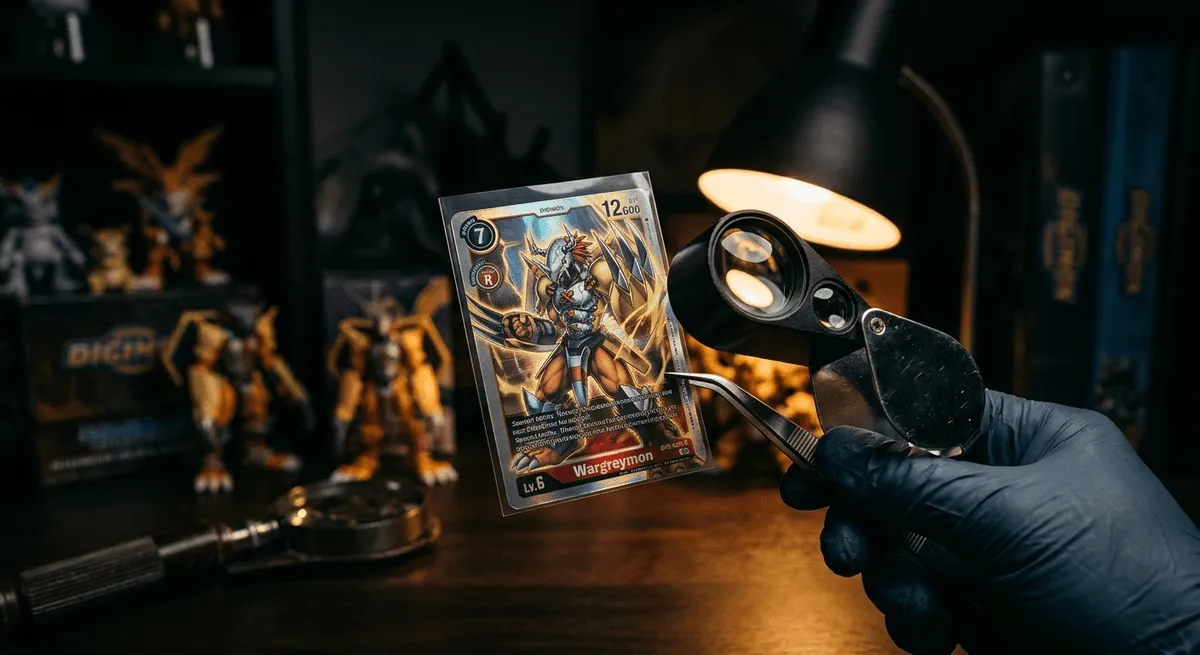
Digimon Card Grading: The Complete 2026 Guide
A complete 2026 Digimon card grading guide covering what to grade, what buyers pay for, and how condition changes value.
April 1, 2026 · 8 min read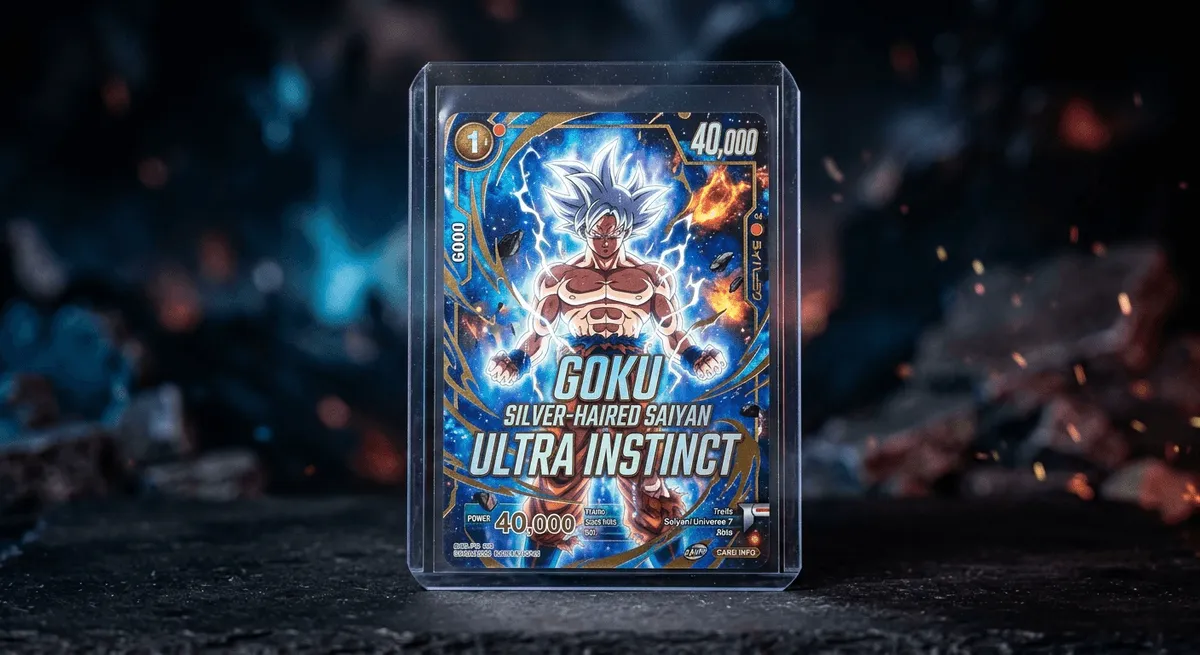
Dragon Ball Super Card Grading Guide (2026)
A 2026 Dragon Ball Super grading guide covering standout cards, condition risks, grading strategy, and when submission fees make sense.
April 1, 2026 · 8 min read
Day 1 of the 2026 Pokémon Los Angeles Regional Championships now underway featuring Pokémon VGC, Pokémon TCG and Pokémon GO events, tune in to the official livestream feeds here
The 2026 Pokémon Los Angeles Regionals are underway! Learn what this means for card collectors and how MasterGrade AI grading can help maximize value.
May 9, 2026 · 2 min read
Day 1 of the 2026 Pokémon Los Angeles Regional Championships now: what it means for collectors
Day 1 of the 2026 Pokémon Los Angeles Regionals is underway! Learn how the event impacts card values and your collection. Grade smarter with MasterGrade.
May 9, 2026 · 4 min read