
Japanese Pokemon Cards: Grading and Value Guide

Last reviewed: April 2026. Service information, grading standards, and market context were checked against current hobby guidance and official source pages where applicable.
Japanese Pokemon cards do not simply mirror the English market. They are printed for a different domestic audience, released with different priorities, and collected under a different set of cultural assumptions. That creates a fascinating crossover market for graders. Some Japanese cards are easier to gem because of superior factory quality. Others are valuable precisely because they never had an English equivalent. If you understand where Japanese Pokemon diverges from English Pokemon, you can grade more intelligently and avoid treating two very different markets like the same thing.
Why Japanese Pokemon Cards Are a Different Market
Japan is the home market for Pokemon, and that affects everything from print quality to collector behavior. Japanese releases often arrive earlier, feature exclusive promos, and highlight products that never appear in exactly the same form overseas. Domestic Japanese collectors may value a set for reasons that English-market buyers barely notice, such as an illustrator, event tie-in, promo distribution method, or exclusive foil treatment. That means value is not always driven by the same chase cards that dominate English discourse.
PSA uses the same top-level grading scale for Japanese cards, but the practical submission experience can feel different because Japanese print runs often come cleaner out of the pack. Centering tends to be stronger, edges can be sharper, and the overall finishing quality is sometimes more consistent than comparable English releases. That does not guarantee a PSA 10, but it does explain why Japanese submissions can produce higher gem rates on certain modern sets.
Collectors love Japanese Pokemon for another reason: visual fidelity. Richer holo patterns, better texture execution, and more refined card stock can make Japanese versions feel more premium even before grading enters the conversation. A slab simply amplifies those differences and gives buyers confidence that the copy they are seeing is not only authentic, but among the best available examples.
PSA Grading for Japanese Pokemon — What Changes?
In theory, PSA applies the same standards regardless of language. A Japanese card still needs strong centering, clean corners, solid edges, and a sharp surface to reach gem mint territory. In practice, Japanese cards often benefit from better manufacturing tolerances. The same 55/45 centering threshold applies, but many Japanese cards arrive closer to dead-center than their English counterparts, especially in modern premium sets.
Corner and edge standards do not change just because the card is Japanese. Whitening is still whitening. A touch on the corner still counts. What does change is the baseline expectation collectors bring into the review. Because Japanese cards tend to start cleaner, graders can become more selective. A small flaw that seems acceptable on a notoriously rough English set may feel more disappointing on a Japanese card that otherwise looks immaculate.
Surface is where language-specific quirks matter most. Japanese holofoil patterns can differ noticeably from English versions, and some promo finishes show scratches or print lines in unique ways. Certain glossy surfaces are beautiful in-hand but unforgiving under direct light. The lesson is simple: do not assume Japanese automatically means easy PSA 10. It means you may have a better starting point, but you still need to inspect every category with discipline.
Japanese 1st Edition vs Unlimited — Critical Distinction
One of the biggest mistakes newer collectors make is failing to separate Japanese 1st Edition from Unlimited. That distinction is critical. On many Japanese cards, especially vintage and early modern product, 1st Edition versions carry a visible stamp and materially different market value. The premium is not universal, but on the right sets it is dramatic.
Japanese 1st Edition Base-era style material and later early-2000s product can be especially attractive because sealed quantities are thin and high-grade singles are tightly held. Unlimited Japanese cards are not worthless, but they are often far more available, which means the grade must do more work to create value. When you combine a 1st Edition marking with Japanese print quality and strong demand for a fan-favorite Pokemon, grading becomes much more compelling.
This is also where Japanese exclusives enter the picture. Many promos, special decks, vending releases, and event cards never appeared in English at all. For those cards, there is no direct English comparison to anchor pricing. Graded scarcity becomes its own language. If a card is both Japanese-exclusive and difficult to find clean, even a niche audience can sustain very strong prices.
Most Valuable Japanese Pokemon Cards
The modern Japanese market is rich with grading targets. Shiny VMAX cards from Japanese-exclusive shiny subsets remain popular because collectors love the combination of premium finish and recognizable chase Pokemon. Umbreon VMAX and other alternate-art promo cards continue to attract serious money in top grades, especially when Japanese release methods kept supply uneven or tied certain cards to special boxes and lotteries.
Eevee Heroes is another cornerstone for modern Japanese grading. The set helped define a wave of collector demand centered on Eeveelutions, textured full arts, and premium pack aesthetics. Cards from the product line remain grading staples because raw demand is strong and PSA 10 appeal is even stronger. Similar logic applies to Japanese anniversary products, campaign promos, and sealed-box exclusives that function more like collectibles than ordinary pack inserts.
Even when a title in English sounds familiar, the Japanese version can be a different market entirely. A Japanese-only campaign card or low-distribution box promo may outperform a more famous English card simply because scarcity is real and the artwork never received a comparable western release. That is why Japanese Pokemon grading works best for collectors who can think beyond English set checklists.
English vs Japanese Pokemon — Which Should You Grade?
If your goal is pure investment, Japanese 1st Edition vintage and meaningful exclusives are often the most interesting submissions. They combine authentic scarcity with collector story. Japanese print quality also helps because your odds of finding a truly strong raw copy can be better than with equivalent English cards. On the other hand, the English market remains larger on platforms like eBay and TCGPlayer, which makes English slabs easier to price and easier to move fast.
For resale, ask where the buyer pool lives. English cards have broader global familiarity, especially for mainstream Pokemon like Charizard, Pikachu, and Umbreon. Japanese cards win when the buyer specifically values original-language presentation, exclusive availability, or superior aesthetics. In other words, English often wins on market width, while Japanese can win on collector depth.
For personal collecting, Japanese cards are hard to beat. The printing quality is often beautiful, the designs can feel more refined, and there is real satisfaction in owning the original-language version of a card line you love. If you grade primarily to preserve and display, Japanese Pokemon is one of the strongest categories in the hobby.
Storing Japanese Pokemon Cards
Storage mistakes quietly ruin Japanese grading candidates because many collectors use the wrong sleeves. Japanese cards are standard Pokemon-sized cards, but accessories sold for Japanese domestic products can vary, and some collectors accidentally use snug sleeves designed for smaller game formats. A tight sleeve can stress corners or leave faint edge rubbing when cards are removed for submission prep. That is unnecessary risk on a card you plan to grade.
Use clean penny sleeves or high-quality soft sleeves that fit without pressure, then store top candidates in semi-rigids or stable top loaders depending on how soon you plan to submit. Keep humidity controlled and avoid stacking heavy binders where textured surfaces can pick up micro-abrasions. Japanese holo and gloss finishes often look pristine until the wrong light exposes handling marks.
When submission time comes, inspect the card after removing it from storage. Sleeve residue, tiny dust particles, and new scratches from sloppy handling can sabotage a card that was previously a top candidate. Proper storage is not glamorous, but it is one of the cheapest ways to protect PSA 10 potential.
FAQ
Do Japanese Pokemon cards grade higher than English cards?
Often they do on modern sets because print quality and centering can be better, but they still need clean surfaces, edges, and corners to earn top grades.
Are Japanese Pokemon cards worth less than English?
Not always. Some Japanese exclusives, vintage 1st Editions, and premium promos are worth far more than their English counterparts.
How can I tell if a Japanese card is 1st Edition?
Look for the visible 1st Edition stamp used on eligible eras and sets, and verify the specific release because not every Japanese card line follows the same pattern.
Should I grade Japanese modern cards?
Yes if the card has strong character demand, a meaningful PSA 10 premium, and clean condition that justifies submission fees.
What is the biggest grading risk on Japanese cards?
Collectors often assume the card is automatically gem-worthy because it is Japanese. Surface scratches and subtle edge flaws still ruin plenty of submissions.
Got a stack of Japanese hits you are unsure about? Run them through /grade first and submit only the copies that really look PSA 10-worthy.
Want to know if your card is worth grading before you pay submission fees?
Try MasterGrade AIRelated Articles
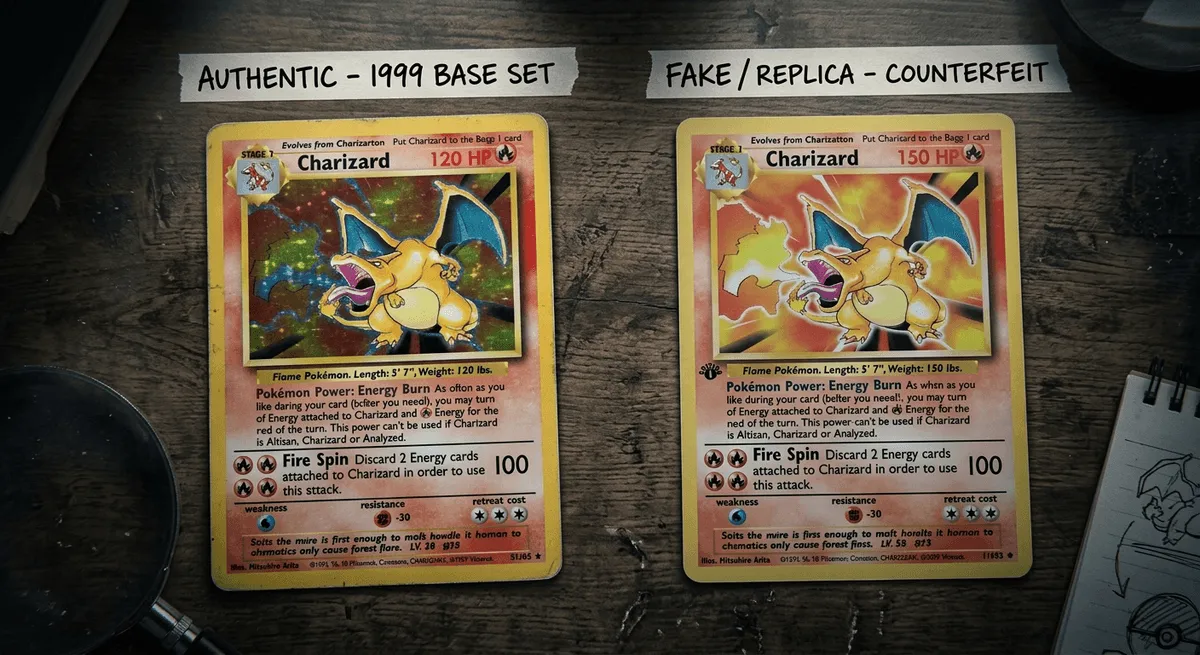
How to Spot a Fake Pokemon Card: Complete Authentication Guide
Learn how to spot fake Pokémon cards by checking print quality, texture, holo patterns, borders, cardstock, and other authenticity red flags.
April 1, 2026 · 8 min read
Pokemon Sealed Products as Investments: What to Buy in 2026
A guide to evaluating Pokémon sealed products for investment, including authenticity checks, condition risks, and long-term value drivers.
April 1, 2026 · 8 min read
Pokemon VSTAR, VMAX and V Cards: Modern Grading Standards
Learn what matters most when grading Pokémon VSTAR and VMAX cards, from centering and print quality to the premiums attached to top grades.
April 1, 2026 · 8 min read
Sealed Pokemon Booster Boxes: To Grade or Not to Grade
A guide to sealed Pokémon booster box investing covering factory-wrap checks, condition standards, and the risks that separate average boxes from premium ones.
April 1, 2026 · 8 min read