
Dragon Ball Super Card Grading Guide (2026)
Last reviewed: April 2026. Service information, grading standards, and market context were checked against current hobby guidance and official source pages where applicable.
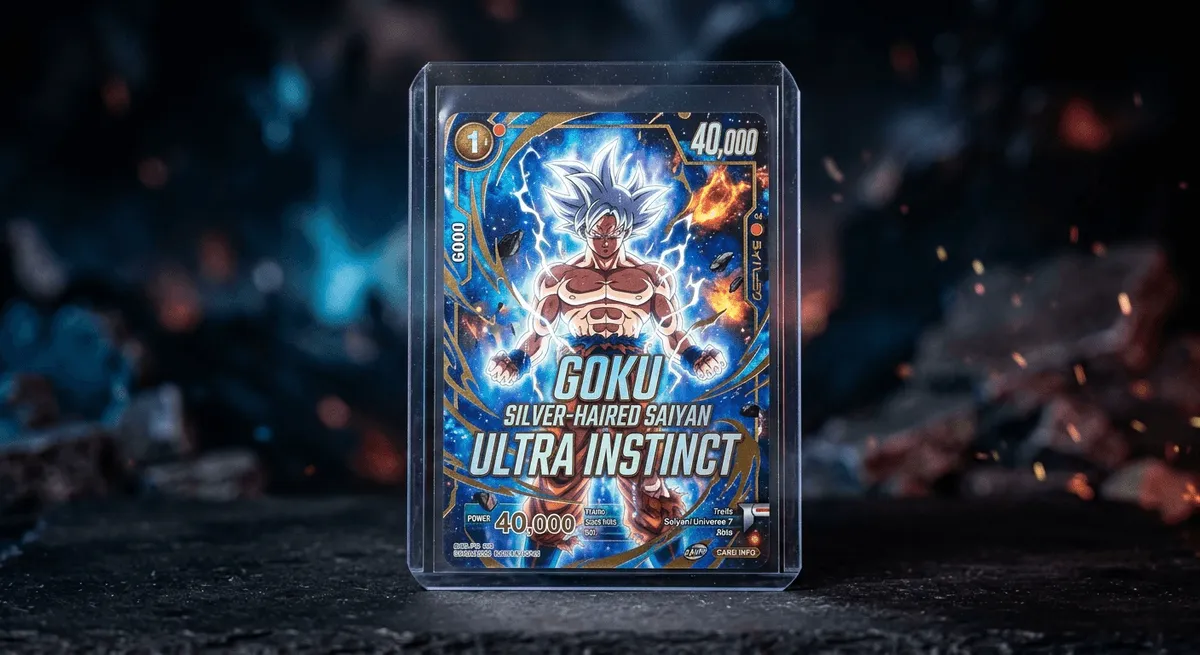
The Dragon Ball Super Card Game has become one of the most grading-friendly modern TCG markets. Between explosive character recognition, flashy foil treatments, and increasingly serious collector demand, condition matters more in 2026 than it did during the game—™s early release years. A raw chase card might sell quickly because Dragon Ball fans love the artwork, but a high-grade copy appeals to both fans and investors. That dual demand is why graded DBS cards keep gaining relevance.
Dragon Ball Super Card Game — A Market Primed for Grading
Dragon Ball Super entered the TCG world with built-in advantages that many games spend years trying to earn. It had a global fan base, iconic characters, and instantly recognizable art direction. Since BT-01, the game has produced a steady flow of collectible hits, ranging from playable leaders to scarce special foils and high-end secret rares. As the card pool expanded through BT-22 and beyond, the market matured. Buyers stopped paying only for rarity and started paying for premium condition too.
That is exactly the kind of market where grading becomes important. A beloved franchise creates emotional demand, but a mature collector base creates price separation. Once collectors begin displaying cards, tracking sales history, and comparing graded population counts, condition is no longer a minor detail. It becomes a core piece of value. In DBS, many cards are visually dramatic, which means surface flaws can either be hidden in poor photos or brutally exposed in person. Grading gives a standardized answer that buyers trust.
There is also an investment angle. Dragon Ball collectors are often willing to hold long term if the character, art, and rarity line up. Early-run secrets, iconic leader cards, and premium alternates become obvious slab candidates because their value story is easy to understand. If a card represents a fan-favorite transformation, a major set milestone, or a low-supply premium treatment, a top grade can push it into a different pricing tier altogether. That is why the DBS market is primed for grading in 2026: it has fandom, scarcity, and a buyer base that increasingly rewards verified quality.
Understanding DBS Card Rarity Types
Dragon Ball Super uses a rarity system that tells you a lot about grading priority before you even inspect the card. R cards are regular rares and are usually not worth grading unless they are tied to unusual demand, scarce promos, or character-specific collector hype. SR cards, or Super Rares, move closer to grading relevance because they often combine better artwork, stronger foil presence, and either competitive or collector demand. RR, sometimes discussed as a premium rare tier in collector conversation depending on product line and shorthand usage, can sit in the middle where raw demand is decent but grading only makes sense for top-condition copies.
Where things get more serious is SP, SCR, and CC material. SP cards are often among the most visually attractive cards in a set, and that matters because art-driven collector demand is a huge part of the DBS market. SCR, commonly referenced by collectors as top-end chase territory, tends to be where the biggest slab premiums live. Championship Cards or ultra-limited event-linked releases can also be prime grading targets because low distribution and prestige amplify condition sensitivity. If a scarce card is already hard to replace, buyers pay more for certainty.
Rarity affects grading priority because it helps define upside. A clean low-rarity card might be beautiful, but if the market is deep with raw copies, the slab premium may stay modest. A scarce SP or SCR with a strong character and stunning art has a much better chance of showing real separation between raw, PSA 9, and PSA 10 prices. Always combine rarity with market demand, but as a rule, higher-tier DBS rarities deserve the most careful pre-screening.
Most Valuable Dragon Ball Super Cards to Know
If you are building a grading stack, start with the obvious high-end names. BT-01 still matters because early sets often carry nostalgia and scarcity that newer collectors underestimate. Across BT-01 through BT-22, flagship cards tied to Gogeta, Goku, Vegeta, Broly, and signature transformation moments consistently outperform less iconic character slots. SS4 Gogeta is one of those names that tends to anchor collector interest, especially when paired with alternate art or premium finish treatments. Strong GSS leaders and alternate art leaders also draw attention because leaders occupy a unique place in the DBS identity: they are playable centerpieces and collector pieces at the same time.
Super combo rares, iconic leaders, and standout chase foils all deserve closer evaluation, but not every expensive card is automatically a good submission. With DBS, the artwork can distract from flaws. Chrome accents, glossy finishes, and textured foils create visual drama, yet they also make scratches easier to miss in poor lighting. That means the best-value Dragon Ball cards to grade are not just the ones with strong sales history. They are the ones that combine demand with condition discipline.
A good rule is to create tiers. Tier one is elite chase material: major SCRs, iconic alternate art leaders, and especially scarce premium releases. Tier two is strong fan-demand cards that sell well raw but can jump meaningfully in a 10. Tier three is sentimental or speculative material that only makes sense when the copy is exceptionally clean. If you think this way, your grading pile becomes much sharper and more profitable.
Dragon Ball Super Centering Standards
DBS cards are notorious for slightly off-center print runs, which means collectors need realistic expectations. In many batches, 55/45 centering is common and perfectly acceptable for a strong submission. Even 60/40 can appear often enough in the product that inexperienced submitters begin to think it is normal for gem-mint candidates. Sometimes it is tolerated, sometimes it is the flaw that caps the grade. The challenge is understanding what looks acceptable versus what actually measures well.
PSA evaluates centering as part of the larger condition profile, not in total isolation. That means a card with mildly imperfect centering but outstanding corners, clean edges, and flawless surface may still perform better than collectors expect. On the other hand, a visibly off-center card with chrome scratches or tiny edge chips quickly loses top-grade potential. Because DBS cards feature bold frames and dramatic designs, centering errors can feel more pronounced than they measure. Use straight-on images, compare all four borders, and avoid judging through angled sleeve photos.
The practical lesson is simple: do not reject every card that is not perfect, but do not overrate a flashy card with obvious border imbalance. With DBS, centering is often the first gate, not the last word. A balanced 55/45 copy with strong surface quality is usually the kind of card worth serious consideration.
Surface Defects Specific to DBS Cards
Surface condition is where many Dragon Ball Super submissions succeed or fail. Chrome layers and premium foils make DBS cards gorgeous, but they also make them unforgiving. Hairline surface scratches can appear from pack handling, binder friction, or even soft contact during sorting. Leader cards with wide foil areas are especially vulnerable because the dramatic finishes create broad reflective zones where tiny lines become noticeable under direct light.
Early print runs are also known for occasional print lines and factory surface imperfections. These are frustrating because collectors often assume that a pack-fresh card is automatically a high-grade card. In DBS, that is absolutely not guaranteed. You can pull a major chase card and still find faint streaking, roller marks, or gloss interruptions once you inspect it under a bright lamp. Corners may look crisp, centering may be decent, and yet the surface holds the card back.
The best inspection method is to tilt the card slowly under a focused light source and check every foil region from multiple angles. If the surface looks noisy, the card probably is not a top submission candidate. Surface flaws are the most common hidden cost in DBS grading because they are easy to miss and expensive to ignore.
When to Grade Your Dragon Ball Super Cards
The timing question is really a break-even question. If the raw value of a DBS card is modest and the likely grade is uncertain, grading may not make financial sense. Once the raw card reaches a level where a PSA 9 or PSA 10 materially changes the value, the math becomes more attractive. Economy submissions around $20 can make sense for cards with decent upside. Regular service around $100 demands a much stronger expected return. High-tier expedited service, whether you call it premium, express, or the kind of $300-plus tier collectors jokingly refer to as walkman-level pricing, only makes sense when the card value already justifies speed and insurance.
A strong example is a chase alternate art or elite SCR that sells well raw and has a proven premium in high grade. If the card looks like a real 9 or 10 contender, grading can protect the asset and improve market confidence. But if the raw value is barely above submission cost and the surface has visible scratching, a slab may simply lock in disappointment. Submit with the expected result in mind, not the hoped-for one.
In other words, grade when condition and market premium align. The submission fee should feel like an investment in a likely outcome, not a lottery ticket.
Using AI to Pre-Screen Dragon Ball Super Cards
AI pre-screening is especially useful for Dragon Ball Super because the game—™s flashy finishes make visual judgment difficult. A card can look spectacular and still hide centering drift, edge wear, or surface marks that reduce the grade ceiling. MasterGrade AI helps by analyzing card images for measurable balance, corner integrity, visible wear, and probable surface concerns before you commit to shipping the card to PSA or another grader.
That is useful in two situations. First, when you have multiple copies of the same card and need to pick the strongest one. Second, when you are emotionally attached to a big hit and need an objective opinion before spending money. AI does not replace official grading, but it does help eliminate bad submissions. That alone can save collectors a lot over time.
If you want a fast condition read before choosing your next batch, try /grade. It is one of the easiest ways to narrow a Dragon Ball submission pile to the cards that actually deserve the fees.
FAQ
Are Dragon Ball Super cards worth grading?
Yes, especially premium leaders, alternate arts, secrets, and limited releases with strong fan demand and clean condition.
Which DBS rarities should I prioritize?
Generally SP, SCR, championship-linked cards, and major alternate arts. Higher rarity usually means better slab upside when the condition is strong.
How important is centering in DBS?
Very important, but realistic standards matter. Many DBS cards are not perfect out of the pack, so a balanced 55/45 copy can still be an excellent candidate.
What defects hurt DBS grades the most?
Surface scratches, foil scuffing, print lines, and edge wear are the most common issues that quietly cap top grades.
Can AI help with DBS grading?
Yes. AI is a strong pre-screening tool for centering, corners, edges, and visible surface problems before you spend money on a formal submission.
Want to pre-screen your DBS cards now? Use /grade.
Want to know if your card is worth grading before you pay submission fees?
Try MasterGrade AIRelated Articles
Digimon Card Grading: The Complete 2026 Guide
A complete 2026 Digimon card grading guide covering what to grade, what buyers pay for, and how condition changes value.
April 1, 2026 · 8 min read
What Is a Mint Condition Card Worth? Complete Value Guide
See how mint condition changes card value across Pokémon, sports, Magic, and other categories when buyers pay up for premium copies.
April 1, 2026 · 8 min read
Day 1 of the 2026 Pokémon Los Angeles Regional Championships now underway featuring Pokémon VGC, Pokémon TCG and Pokémon GO events, tune in to the official livestream feeds here
The 2026 Pokémon Los Angeles Regionals are underway! Learn what this means for card collectors and how MasterGrade AI grading can help maximize value.
May 9, 2026 · 2 min read
Day 1 of the 2026 Pokémon Los Angeles Regional Championships now: what it means for collectors
Day 1 of the 2026 Pokémon Los Angeles Regionals is underway! Learn how the event impacts card values and your collection. Grade smarter with MasterGrade.
May 9, 2026 · 4 min read