
Digimon Card Grading: The Complete 2026 Guide
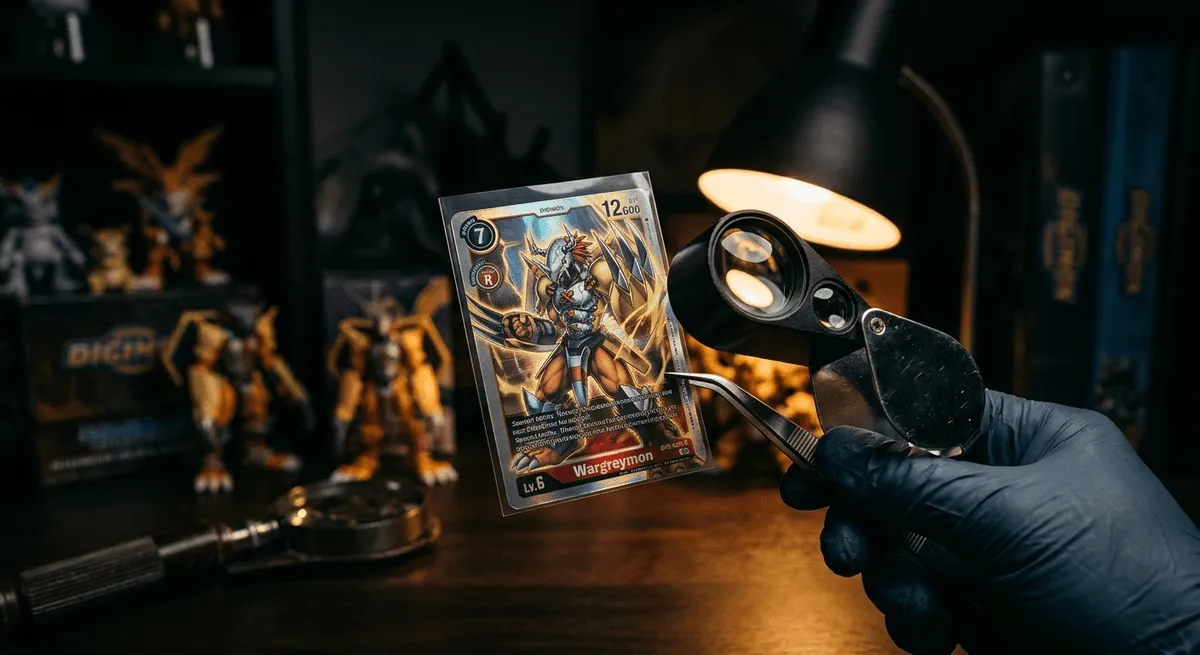
Last reviewed: April 2026. Service information, grading standards, and market context were checked against current hobby guidance and official source pages where applicable.
Digimon card grading has gone from a niche collector habit to a serious strategy for players, investors, and sealed-product hunters in 2026. As the Digimon Card Game matured through BT-15, BT-16, and BT-17, the market stopped treating every shiny card the same. Collectors now pay close attention to condition, print quality, centering, and language preference, which means the gap between a clean raw card and a gem-mint graded copy can be enormous. If you are pulling alternate arts, serial-style chase cards, or early-era staples in unusually strong condition, grading is no longer just a vanity move. It can be the difference between selling into a crowded raw listing pool and commanding a premium as a top-condition example.
What Is Digimon Card Grading and Why Does It Matter in 2026?
Card grading is the process of having a third-party company evaluate a Digimon card for centering, corners, edges, and surface condition, then assign it a numerical grade. In practice, grading gives buyers confidence. A raw card listing always carries uncertainty: maybe the seller missed a corner ding, maybe the holo has micro-scratches, or maybe the card looked centered in one photo but not in hand. A graded card removes much of that doubt because the condition has already been assessed and encapsulated. In 2026, that matters more than ever because the Digimon market is wider, faster, and more informed than it was even two years ago.
The other reason grading matters now is market segmentation. Competitive players still buy raw copies to sleeve and play, but collectors increasingly chase pristine display pieces. Alternate arts, event promos, and harder-to-hit chase cards have become category leaders in that collector market. Once a card reaches a certain raw value, condition sensitivity increases. Two copies of the same Digimon secret rare may look similar in a binder, yet one becomes a PSA 10 and the other tops out at a PSA 8 because of print lines or rough back edges. That grade spread can translate into a major price gap. Grading lets you capture that premium when the card truly deserves it, while also preventing you from overestimating weaker raw copies.
There is also a practical angle. Submission fees, insurance, and waiting time all cost money, so collectors need a smarter way to decide which cards should go in the grading pile. That is where pre-screening matters. Instead of guessing, you can evaluate likely outcomes before paying for a submission. In a market where condition-based premiums are growing, grading matters because accuracy matters.
Understanding the Digimon TCG Rarity System
Digimon—™s rarity system is one of the biggest factors in deciding what deserves grading. The game organizes releases into several set families. BT sets are the main booster expansions, EX sets are extra boosters that often contain nostalgic or specialty themes, and DP cards generally refer to deck or promotional distribution formats depending on the product line. Once you understand that structure, it becomes easier to spot which cards are naturally more collectible and which ones are mostly player demand driven.
Within those sets, rarity labels help establish scarcity. R cards are basic rares and usually only deserve grading when they are unusually scarce promos, iconic fan-favorite characters, or exceptionally clean early prints. RR, or Double Rare, cards often have stronger demand because they include many playable staples and visually appealing foils. SR, or Super Rare, is where collector attention becomes more serious, especially for alternate art treatments and key meta cards. SP cards, often Special Rare variants, are the eye-catchers of many sets because of their premium artwork and lower pull rates. SEC cards, or Secrets, are the true chase layer in many Digimon releases and are often the first cards collectors consider for grading. PS, commonly used for Promo Stamp or other promotional markings depending on release context, can be especially attractive when linked to tournaments, limited campaigns, or convention distribution.
In 2026, rarity alone is not enough. You also need to consider artwork demand, character popularity, and release context. A mid-tier SR with beautiful art and fan-favorite Digimon can outperform a less-loved card with nominally higher rarity. Likewise, early BT secrets and EX special variants often behave differently from later mass-opened sets. The smartest grading decisions come from combining rarity with actual collector demand, not just reading the symbol in the corner.
Which Digimon Cards Are Worth Grading?
The simplest rule is this: once a raw Digimon card is worth roughly $20 or more, grading starts to become financially sensible if the condition looks strong. That threshold is not a law, but it is a practical starting point. If a card is only worth a few dollars raw, grading fees and shipping usually erase the upside unless the card is incredibly scarce. Once you move into the $20-plus range, however, even a modest grade bump can justify the cost, and a gem-mint result can produce meaningful profit.
For 2026, many collectors are watching BT-15, BT-16, and BT-17 closely because newer chase cards can still be found in strong condition before years of handling degrade the supply. Alternate arts with low pull rates, premium character art, and cross-generational fan appeal are obvious targets. Shoto Gray serial-style cards and other headline chase inserts deserve special attention because they blend low supply with novelty, which is exactly the kind of mix that grading rewards. Earlier chase cards from BT-01 onward may already have an established graded market, but modern set stars are where savvy submitters can still gain an edge before pop reports swell.
That said, not every expensive raw card should be graded. If the back has whitening, the holo has scratching, or the centering is visibly poor, a raw sale may be the better move. Grading works best when the card already has value and appears to have a realistic path to an 8, 9, or 10. The sweet spot is a raw chase card with strong demand, crisp corners, clean foil, and balanced borders. That is where grading turns condition into profit instead of just adding cost.
Digimon Centering Standards — How Strict Is PSA?
Digimon cards tend to have slightly wider borders than many modern Pokemon cards, which changes how collectors perceive centering. A Digimon card can look a little off to the naked eye and still land comfortably within PSA 10 territory if the measurements remain around 55/45 front centering. That is important because many newcomers apply overly strict visual standards and pass on cards that are actually strong submission candidates. PSA cares about measurable balance, not just whether the card feels perfectly symmetrical at a glance.
Across BT-01 through BT-17, print variation matters. Early BT runs can show more inconsistent cuts, and some waves have a reputation for top-to-bottom imbalance or slightly rough edge finishing. Later sets often display cleaner manufacturing, but cleaner does not mean flawless. Even recent Digimon print runs can show left-right drift, tiny corner frays, or foil alignment quirks. The key is to compare the card to realistic PSA standards instead of fantasy standards. A card does not need to look laser-perfect to grade well.
For practical pre-screening, examine both front and back borders under even lighting and avoid judging from a single phone photo taken at an angle. A card with 55/45 centering, clean corners, and minimal surface issues can still be an excellent PSA 10 candidate. But once centering pushes toward obvious 60/40 or worse, the other subfactors have to be nearly flawless to keep the top-grade dream alive. Centering is rarely the only issue on Digimon cards, yet it is often the first reason collectors misjudge a submission candidate.
Japanese vs English Digimon Cards — Which Should You Grade?
Japanese Digimon cards often have tighter manufacturing and cleaner centering, which makes them attractive for collectors chasing high gem-mint rates. If your goal is simply to maximize grading success, Japanese copies can be appealing because the baseline print quality is frequently more consistent. The artwork also tends to feel especially sharp on pristine Japanese foils, and certain promos or region-specific releases have strong collector appeal globally.
English cards, however, have a powerful advantage: market accessibility. The English Digimon market dominates platforms like TCGPlayer and much of eBay—™s mainstream buyer traffic. That means graded English cards often have a broader pool of potential buyers, especially for collectors in North America. If you plan to sell rather than simply collect, liquidity matters. A technically cleaner Japanese card is not always the better submission if the English version has stronger demand and easier resale.
The best answer depends on your objective. Grade Japanese cards when condition quality is unusually strong, the release is exclusive, or the character has dedicated collector demand. Grade English cards when the market is deeper, the card is easier to source, and you want smoother resale activity. In both cases, the card still has to earn its submission on condition. Language can shift the ceiling, but condition decides whether the card belongs in the slab at all.
Common Digimon Card Defects to Look For
Digimon cards have a few recurring defect patterns that collectors should know before sending anything to PSA or another grader. One of the most common is holo scratching, especially on certain EX-card Digimon foils where the reflective layers show hairline marks under direct lighting. A card can look pack-fresh in normal room light and still reveal a network of faint surface scratches once you tilt it under a grading lamp. Those marks can quietly turn a 10 candidate into a 9 or worse.
Edge whitening is another major issue, particularly on cards that were bindered loosely, moved in and out of sleeves, or played without ideal protection. Because Digimon cards often have dark backs and clean border edges, even tiny white nicks stand out to graders. Early BT runs also produced their share of print defects, including factory edge wear, small corner roughness, and occasional print-line style surface disruption. Many collectors assume factory defects are forgiven. Usually, they are not. If the flaw is on the card, it still affects the grade.
The safest routine is to inspect every submission candidate under angled light, check the back edges carefully, and compare all four corners at high magnification. If you are seeing defects immediately, graders definitely will. Spotting these issues before submission is how you avoid paying premium fees for disappointing labels.
How MasterGrade AI Grades Digimon Cards
MasterGrade AI helps Digimon collectors make smarter grading decisions before they spend money on shipping, insurance, and third-party service fees. The system analyzes front and back centering, estimates border balance, identifies corner softness, flags edge wear, and looks for surface problems such as scratches or print disruptions visible in high-quality images. That makes it useful as a first-pass filter for modern Digimon chase cards, especially when you are comparing multiple copies and need to choose the best candidate.
In real terms, AI pre-screening saves money because it separates likely submissions from emotional submissions. Collectors often want to grade their favorite pull even when the card is clearly a 7 or 8. MasterGrade AI adds a more objective layer. If one copy shows stronger centering and cleaner corners than another, the tool helps make that difference obvious. If a card appears gem-worthy but surface glare reveals scratching, the analysis can keep you from wasting a grading fee on false hope.
If you want to evaluate your own Digimon cards right now, try /grade. It is a fast way to pre-screen high-value cards, prioritize the right submissions, and build a more efficient grading stack before you ever fill out a PSA form.
FAQ
Are Digimon cards worth grading?
Yes, especially when the raw card value is above about $20 and the condition appears strong. Premium alternate arts, secrets, promos, and limited releases can gain substantial value in high grades.
What is the rarest Digimon card?
The answer changes as new promos and chase inserts release, but low-distribution event promos, special serial-style cards, and top-end secret or campaign cards usually sit at the top of the rarity ladder.
How does centering work on Digimon cards?
Centering measures the visual balance of borders on the front and back. A card does not need to be perfect to earn a top grade; around 55/45 on the front can still be PSA 10 territory if the rest of the card is clean.
PSA vs BGS for Digimon?
PSA tends to offer the broadest market recognition and easiest resale for many collectors. BGS can be attractive for pristine-level cards and subgrades, but the best option depends on your selling strategy and the card—™s condition profile.
Can AI grade Digimon accurately?
AI is best used as a pre-screening tool, not a replacement for official third-party grading. It can analyze centering, visible edge wear, corners, and surface clues quickly, helping you decide which cards are actually worth submitting.
Ready to see whether your Digimon hits are worth sending in? Try /grade for a free AI grade in seconds.
Want to know if your card is worth grading before you pay submission fees?
Try MasterGrade AIRelated Articles
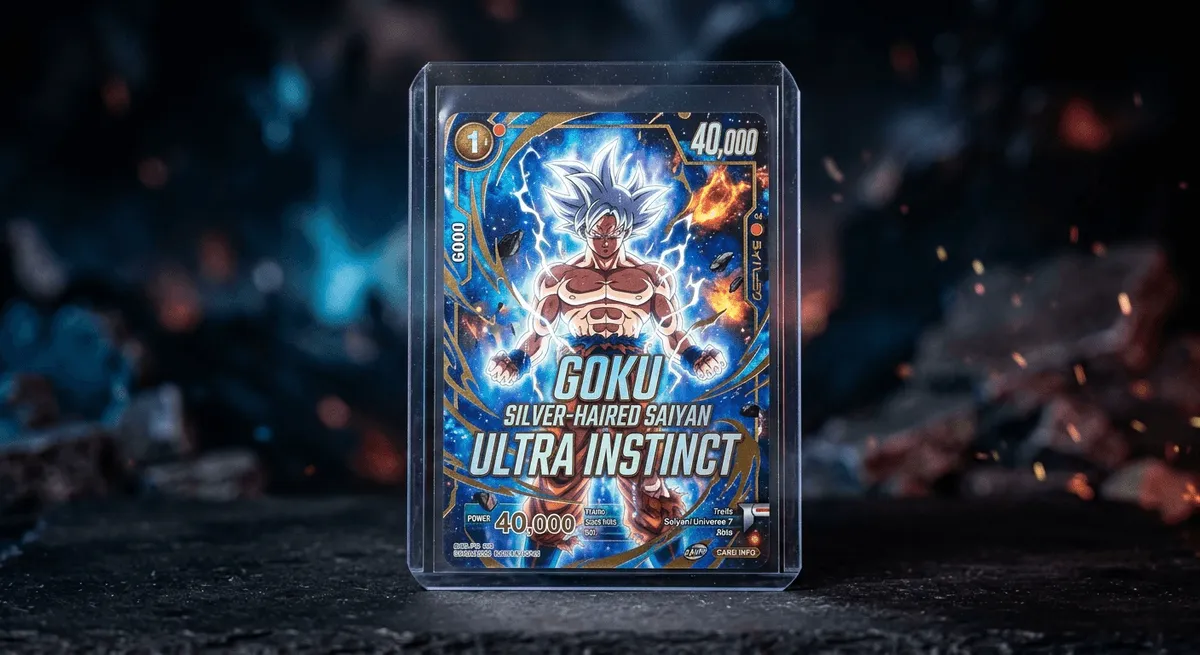
Dragon Ball Super Card Grading Guide (2026)
A 2026 Dragon Ball Super grading guide covering standout cards, condition risks, grading strategy, and when submission fees make sense.
April 1, 2026 · 8 min read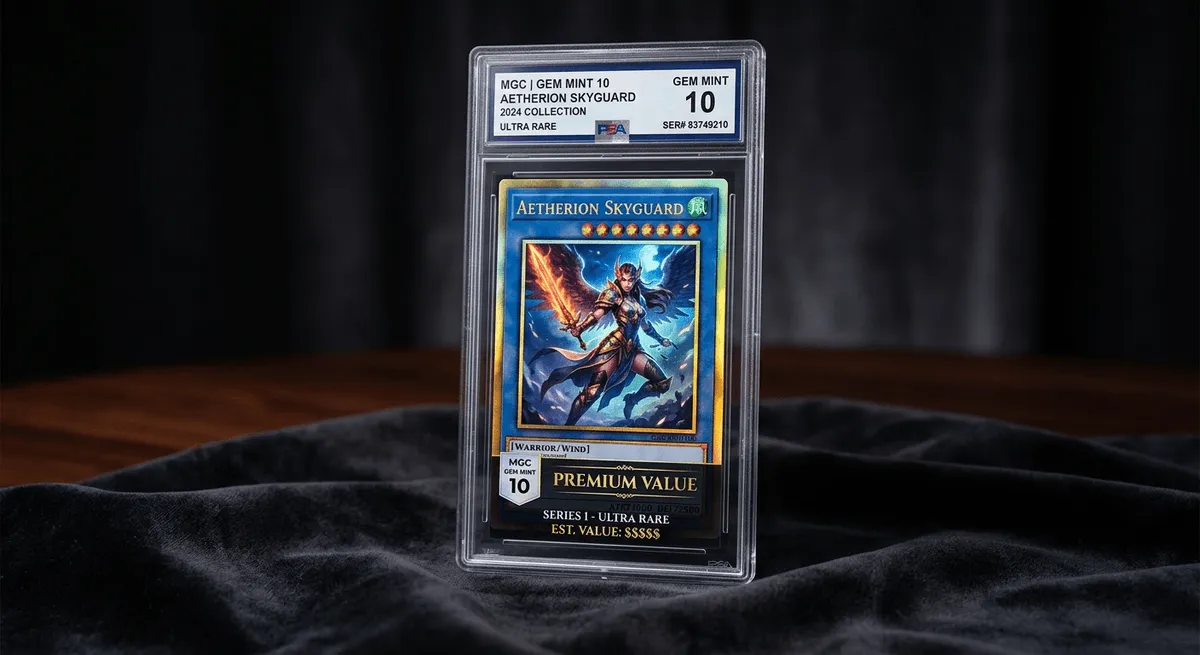
What Is a Mint Condition Card Worth? Complete Value Guide
See how mint condition changes card value across Pokémon, sports, Magic, and other categories when buyers pay up for premium copies.
April 1, 2026 · 8 min read
Day 1 of the 2026 Pokémon Los Angeles Regional Championships now underway featuring Pokémon VGC, Pokémon TCG and Pokémon GO events, tune in to the official livestream feeds here
The 2026 Pokémon Los Angeles Regionals are underway! Learn what this means for card collectors and how MasterGrade AI grading can help maximize value.
May 9, 2026 · 2 min read
Day 1 of the 2026 Pokémon Los Angeles Regional Championships now: what it means for collectors
Day 1 of the 2026 Pokémon Los Angeles Regionals is underway! Learn how the event impacts card values and your collection. Grade smarter with MasterGrade.
May 9, 2026 · 4 min read