
Beginner's Guide to Lorcana Card Grading
Beginner's Guide to Lorcana Card Grading
The world of Lorcana is rapidly expanding, and with it, the interest in Lorcana card grading. For new collectors, understanding the grading process, its costs, and potential benefits can seem daunting. This guide provides a comprehensive introduction to Lorcana card grading, covering everything from assessing your cards' condition to choosing a grading service and understanding the grading scale. We'll also cover how to use MasterGrade's free AI card grader to get a quick, pre-submission condition check.
Why Grade Lorcana Cards?
Card grading serves several key purposes for collectors:
Understanding the Grading Scale
Most grading services, including PSA (Professional Sports Authenticator), BGS (Beckett Grading Services), and CGC Grading (Certified Collectibles Group), use a numerical grading scale from 1 to 10, with 10 being the highest possible grade. Here’s a general breakdown:
Assessing Your Lorcana Cards
Before submitting your cards for grading, it's crucial to carefully assess their condition. Here's a step-by-step guide:
Choosing a Grading Service
Several reputable grading services are available, each with its own strengths and weaknesses. The "big three" are:
Consider these factors when choosing a grading service:
Cost of Grading
The cost of grading varies depending on the grading service, the declared value of the card, and the turnaround time. Here's a general overview:
Remember to factor in shipping costs to and from the grading service. Check MasterGrade's pricing page for a comparison of different services.
Submitting Your Cards
Once you've chosen a grading service and assessed your cards, follow these steps to submit them:
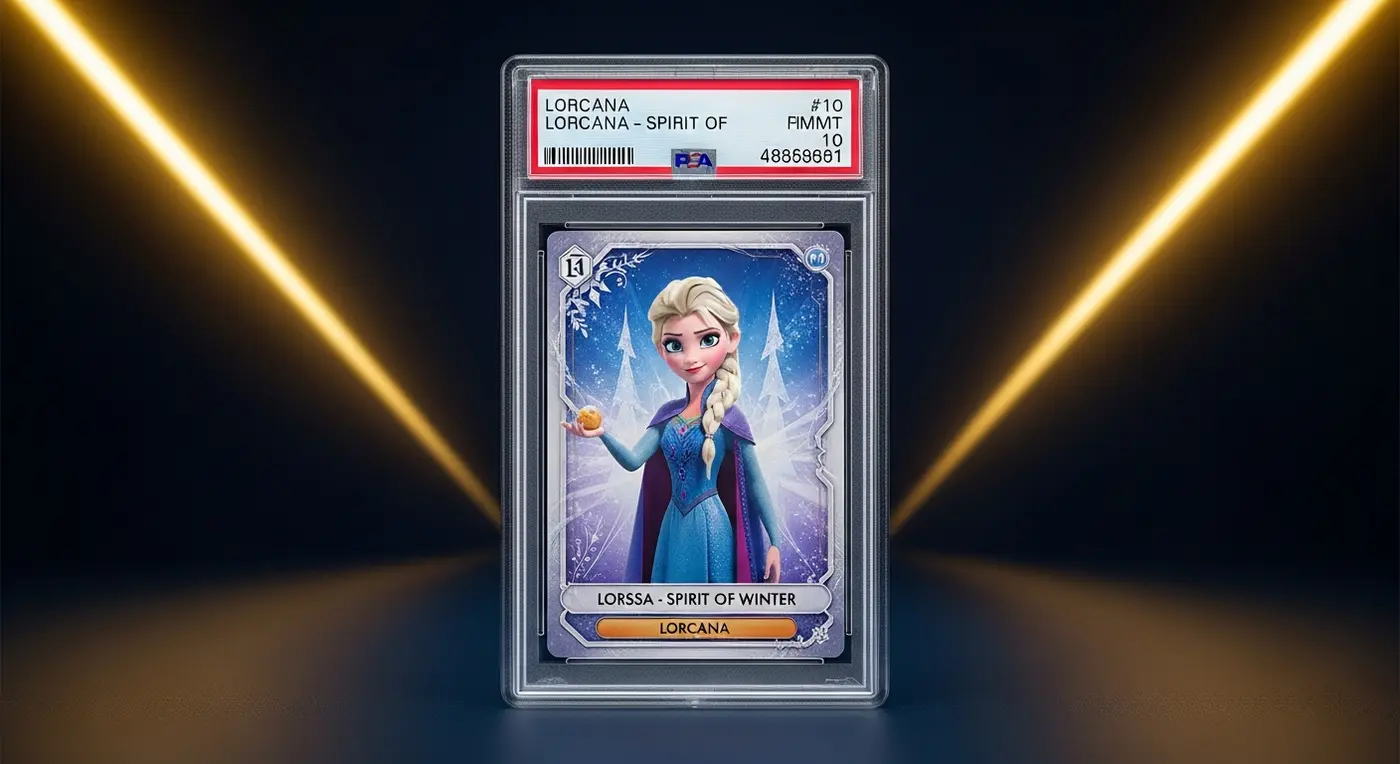
Real-World Example: Elsa - Spirit of Winter (Into the Inklands)
Let's say you pulled an Elsa - Spirit of Winter from the Into the Inklands set. After a thorough inspection, you believe it's in excellent condition, with near-perfect centering, sharp corners, and a clean surface.
The potential increase in value makes grading worthwhile, provided the card receives a high grade. Before submitting, use MasterGrade's free AI card grader to get an initial assessment of the card's condition.
Beyond Grading: Protecting Your Investment
Grading is just one aspect of card collecting. To further protect your investment:
Grading Lorcana cards can be a rewarding experience for collectors, adding value and protection to their prized possessions. By understanding the grading process, assessing your cards' condition, and choosing a reputable grading service, you can make informed decisions and maximize the potential of your Lorcana collection. Start with a free AI card grader to gauge your card's potential before you pay.
Get card-grading tips & market news
Join collectors getting our best grading guides, value alerts, and set breakdowns. A few emails a month — no spam.
Stay in the loop
Get notified about new features, grading tips, and market updates.
Frequently asked questions
What does "centering" mean in card grading?
Centering refers to how well the artwork is positioned within the card's borders. A perfectly centered card has equal spacing on all sides, while off-centering can negatively affect the grade.
How long does it take to get a card graded?
Turnaround times vary depending on the grading service and the service level you choose. Basic services can take several weeks or months, while express services offer faster turnaround times.
Is it worth grading a common Lorcana card?
Generally, it's not worth grading common cards unless they are in exceptional condition and highly sought after by collectors. The cost of grading may exceed the potential increase in value.
What is a "subgrade" in card grading?
Subgrades are detailed evaluations of specific aspects of a card's condition, such as centering, corners, edges, and surface. BGS (Beckett Grading Services) is known for providing subgrades.
How can I protect my cards before submitting them for grading?
Use soft card sleeves and semi-rigid card holders (e.g., Card Savers) to protect your cards during shipping. Avoid handling the cards excessively and store them in a safe, clean environment.
Related guides
Price Trends: Disney Lorcana Cards Climbing in Price - 07/06/2026
Price Trends: Disney Lorcana Cards Climbing in Price - 07/06/2026 — expert guide for card collectors on MasterGrade.
GuideTop 10 Most Valuable Lorcana Cards in 2026
Discover the top 10 most valuable Disney Lorcana cards in 2026! Learn about current prices, grading tips, and how to maximize your collection's value.
GuideLorcana Price Watch: May 2026 Market Trends
Get the latest Lorcana price trends and investment picks for May 2026. Our market analysis covers key cards, grading tips, and investment strategies.
Grade your cards with AI
Upload a photo and get an instant condition grade with sub-scores and estimated values.
Grade a card free